From Screen Time to Sacred Time: How Gamifying Digital Detox Can Deepen Your Walk with God
Published on November 22, 2026 · 13 min read

In the quiet moments before the day begins, a familiar scene unfolds in countless Christian homes. The alarm sounds, and the hand reaches instinctively not for the Bible on the nightstand, but for the smartphone glowing with notifications from the night. Email, news headlines, social media updates, the digital world demands our attention before our feet even touch the floor. For many believers, the first thought of the day is no longer a prayer, but a scroll.
A new app called Island, recently highlighted by TechCrunch, offers a fresh and remarkably gentle counterweight to this cultural current. It does not shame users or lock them out of their devices entirely. Instead, it turns staying off your phone into a game, a cooperative one at that. By planting virtual trees that grow only when your screen remains off, Island invites friends and family to cultivate a shared island of restraint and mindfulness together. The joy of seeing a digital forest flourish becomes a positive incentive, replacing the anxiety of forced abstinence with the fruit of communal self-control.
For the everyday Christian, this approach is more than clever design. It echoes a profound biblical truth: transformation is not merely about resisting evil, but about actively cultivating good. The smartphone is not inherently sinful; yet, unbridled use can quietly edge out moments of stillness that are vital for hearing God’s voice. When our thumbs default to scrolling, our hearts may miss the whisper of the Spirit.
This post is not a review of an app, though we will explore how Island works. It is an invitation to reimagine our relationship with technology, not through guilt, but through grace. Together, let’s look at what the data says about our digital habits, how gamification can support spiritual disciplines, and practical steps you can take this week to reclaim the first moments of your morning for what matters most.
The Quiet Crisis: How Smartphones Reshape Our Rhythms
Before we celebrate solutions, we must honestly assess the problem. The numbers paint a sobering picture of a society hooked on connectivity.
- Frequency over duration: Research reveals that the typical user picks up their phone nearly 96 times each day, once every 10 minutes during waking hours. Each glance is a micro-interruption, fracturing attention and pulling the mind away from sustained reflection.
- Morning defaults: A recent survey found that 4 in 5 smartphone users check their devices within 15 minutes of waking. Before greeting the day with gratitude, we expose ourselves to whatever the algorithm has curated.
- Spiritual competition: A 2024 study by the Barna Group noted that 64% of practicing Christians admit their phone “sometimes or often” distracts them during Bible reading or prayer. The very tool that carries a Bible app is also the greatest hindrance to engaging it.
These statistics are not meant to induce guilt. They are a mirror. Just as the apostle Paul wrote, “All things are lawful unto me, but all things are not expedient” (1 Corinthians 6:12, KJV), we may freely use our devices, but not all usage builds us up.
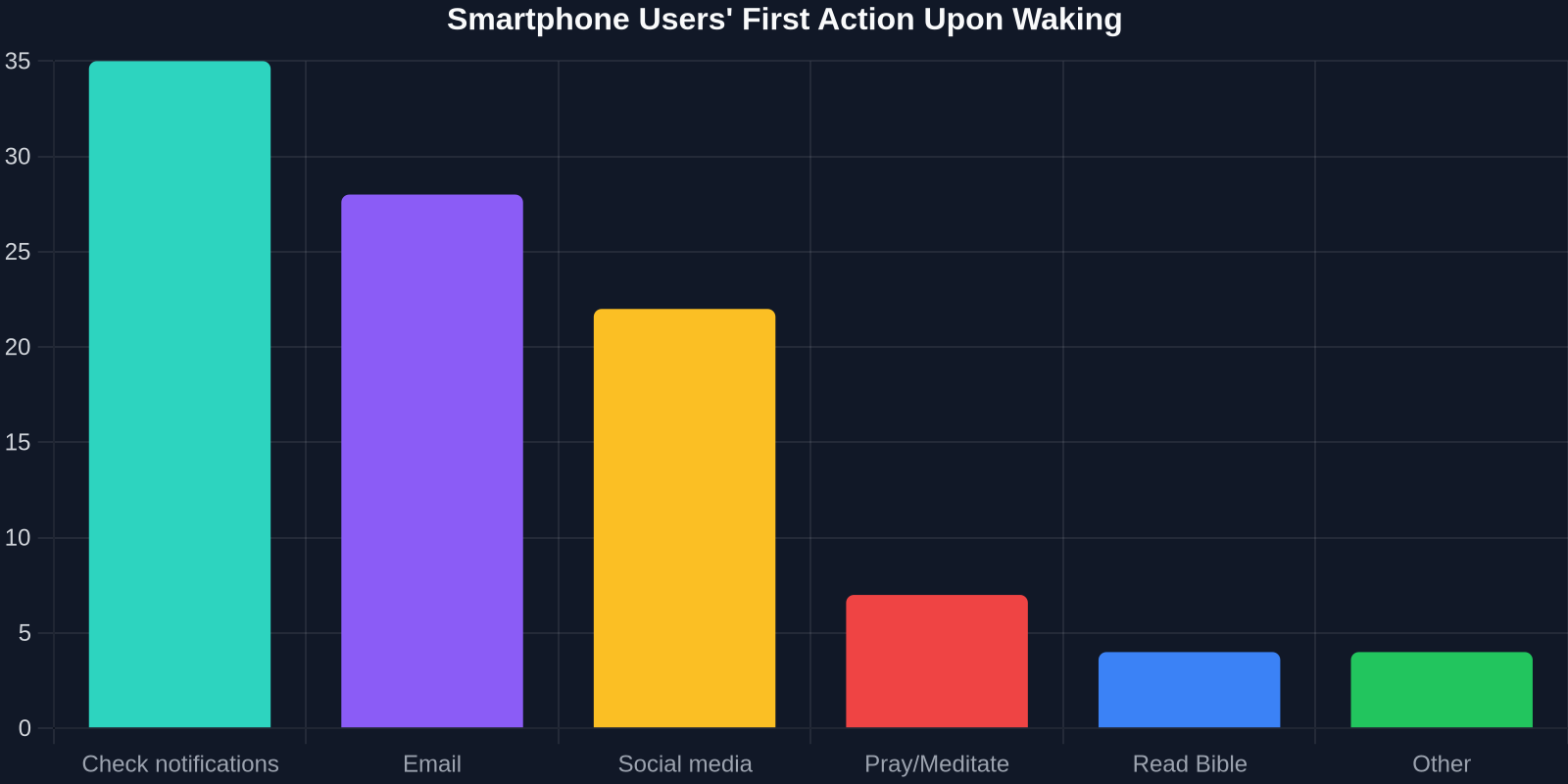
Moreover, a study by the National Bureau of Economic Research recently uncovered that simply banning cell phones in schools leads to measurable gains in academic performance. The structured environment, free from the ping of notifications, allowed students to focus and retain more. If such a boundary yields intellectual fruit, how much more could an intentional digital pause yield spiritual fruit?
Yet, a total ban feels harsh and unrealistic for most adults. We need our phones for work, for maps, for connection with loved ones. This is where Island’s playful model shines.
Enter Island: A Game That Grows When You Put the Phone Down
Island does not try to be a fortress of denial. It is a garden of invitation. Here’s how it works, according to the TechCrunch report: you and a few friends start a shared island. Whenever you all keep your phones face-down or locked for a set period, a virtual tree grows. The longer the group’s collective restraint, the more lush and diverse the landscape becomes. Miss a day or mindlessly scroll, and the island’s health declines, but never in a punishing way, simply with gentle reminders of what’s being cultivated.

The app’s brilliance lies in transforming an abstract virtue (self-control) into a tangible, shared reward. This taps into biblical principles:
- Community accountability: “Two are better than one; because they have a good reward for their labour. For if they fall, the one will lift up his fellow” (Ecclesiastes 4:9-10, KJV). Island leverages gentle peer encouragement, not surveillance.
- Delayed gratification: The tree does not sprout instantly. Patience, a fruit of the Spirit, is exercised every time we resist the urge to pick up the device.
- Positive reinforcement: Instead of focusing on “don’t,” the app focuses on “do”, do invest this time elsewhere, do pray, do read.
Rewiring the Morning: From Phone First to Pray First
The most spiritually critical moment of the day is its opening. Psalm 5:3 declares, “My voice shalt thou hear in the morning, O LORD; in the morning will I direct my prayer unto thee, and will look up.” That ancient pattern is in direct tension with the modern habit of scrolling while still supine.
What if, instead of checking notifications, we checked in with God? Island can act as a gentle gatekeeper. The app’s focus mode, which counts tree-growing time only when you’re off the phone, could be scheduled for the first 30 minutes after waking. During that half hour, you might:
- Read a daily Bible passage, perhaps the same verse that appears on your lock screen through a tool like Vesper, which offers a convenient, distraction-free KJV verse each day.
- Pray through a written prayer list without toggling to another app.
- Sit in silence, listening for the Spirit rather than the buzz of alerts.
| Morning Habit | Without Intention | With Island & Sacred Intent |
|---|---|---|
| First action | Check emails / social media | Prayer & a KJV verse from Vesper |
| Dominant emotion | Reactivity, anxiety | Peace, groundedness |
| Attention span | Fragmented from start | Focused, sustained |
| Spiritual impact | God squeezed into spare moments | God given the firstfruits |
Such a shift does not require monastic isolation. It simply requires recognizing that the first minutes belong to the Lord. Island gamifies that offering, making it delightful instead of dutiful.
The Theology of Attention: Why Where You Look Shapes Who You Become
Jesus taught, “The light of the body is the eye: if therefore thine eye be single, thy whole body shall be full of light” (Matthew 6:22, KJV). In a world of infinite scroll, the “single eye”, the focused, undivided attention, is a rare and holy thing. Our gaze is not neutral; what we behold, we become.

Every notification is a request for your attention. Multiply that by 96 daily pickups, and you have a constant pulling of the soul in a hundred directions. The enemy of spiritual depth is not malice; it is distraction. As the screens get smarter, our ability to sustain a long, uninterrupted gaze on Christ’s beauty weakens.
Island, and practices like it, help us reclaim the “single eye” by blocking not the phone entirely, but the pointless peeks. When the phone is placed face-down and the island is growing, the message to the brain is simple: “You are choosing something better.”
“I have set the LORD always before me: because he is at my right hand, I shall not be moved.”, Psalm 16:8 (KJV)
The psalmist’s declaration becomes tangible when we physically set the Lord, through prayer, Scripture, or worship, before us in the morning, unhindered by the screen’s competing glow.
Practical Frameworks: 3 Steps to Start Your Phone-Free Morning Today
Implementing this doesn’t require an app, but tools like Island can make the experiment joyful. Here’s a simple, grace-filled plan:
-
Establish a “sacred first 30.” Place your phone in another room overnight or use Island’s focus timer to lock in a 30-minute “tree-growing” session as soon as your alarm goes off. During that window, engage in prayer, Scripture reading, and perhaps journaling. Let the only screen you see be a single verse on your lock screen if you use a widget like Vesper.
-
Form an Island circle with fellow believers. Invite a spouse, a prayer partner, or a small group to link together on the app. The shared goal of growing the island mirrors the church’s call to “provoke one another unto love and to good works” (Hebrews 10:24, KJV). You’re not alone in the digital wilderness.
-
Replace, don’t just remove. Every time you resist the urge to scroll, you have a mental vacuum. Fill it with a short breath prayer (“Lord Jesus Christ, have mercy on me”), a memorized verse, or a moment of intercession for someone on your heart. Over time, the neural craving for digital novelty can be replaced with a craving for God’s presence.
The Ripple Effect: How Taming Screen Time Transforms the Rest of Your Day
The benefits of a phone-free morning extend far beyond the first hour. Research consistently shows that starting the day with reactive tasks (email, news) elevates cortisol and fosters a mindset of scarcity and hurry. Beginning with Scripture and meditation sets a tone of abundance and peace.

Consider a Tuesday morning: without the Island nudge, you wake up, check emails, see a stressful client request, and your prayer time, if it happens at all, is fraught with mental to-do lists. With the nudge, you stay off the phone, read Romans 8, and allow “There is therefore now no condemnation” to become your first truth. That truth then interprets the client email later, rather than the email coloring your view of God.
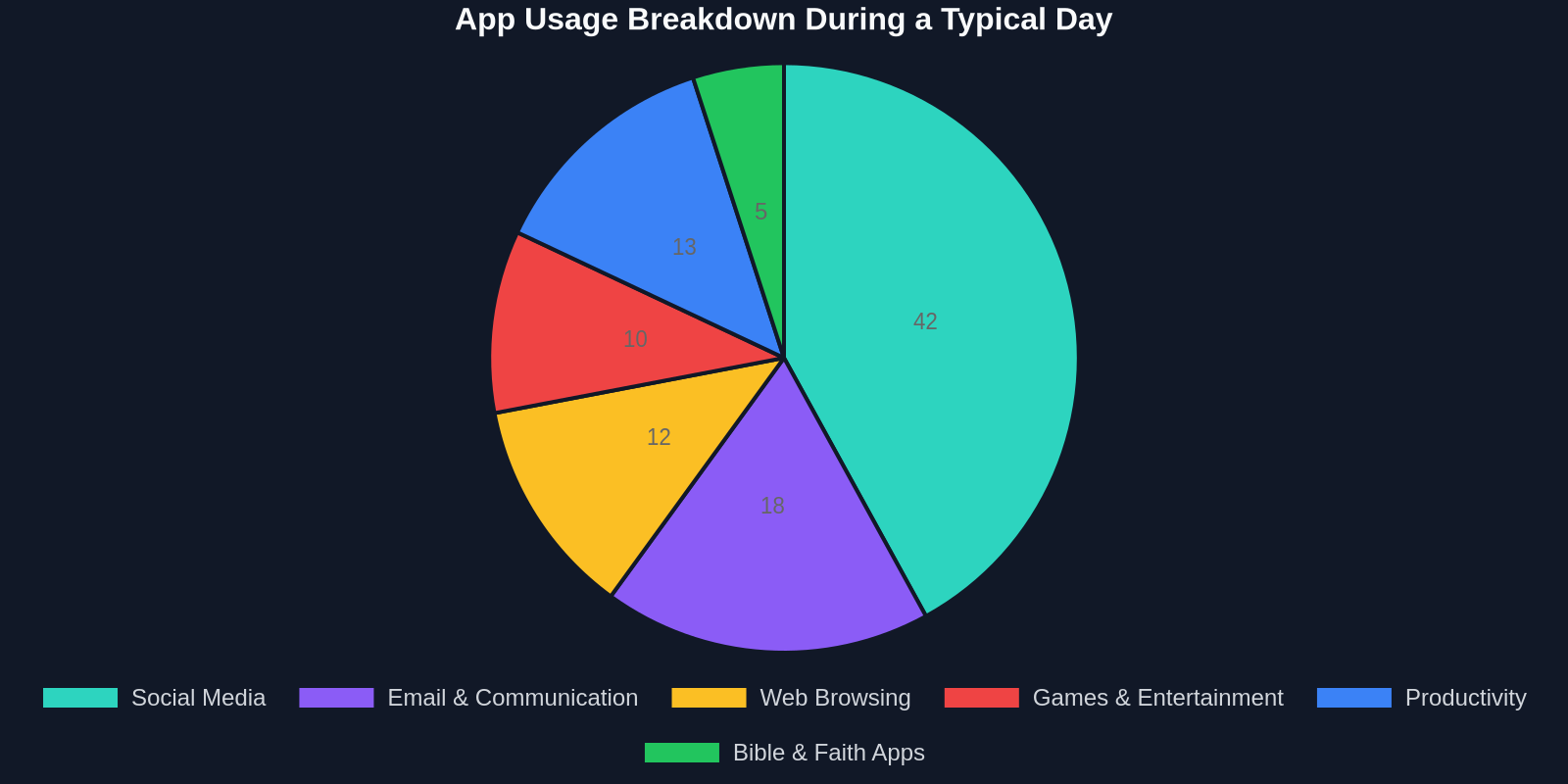
Over weeks, a new pattern solidifies. Just as overgrown paths in a forest can be retrodden, the well-worn neural trails of phone addiction can give way to trails of contemplative prayer. Island’s visual island becomes a symbol of the inner garden being cultivated, a soul that, like a tree planted by rivers of water, brings forth fruit in due season (Psalm 1:3).
But Is It Legalism? Holding Technology Wisely Without Idolizing Abstinence
A gentle caution is warranted. Any tool meant for freedom can become a new law. If checking the Island tree’s growth becomes a new source of anxiety or pride, the cure has become a poison. Paul’s words to the Colossians resound: “Let no man therefore judge you in meat, or in drink, or in respect of an holyday… which are a shadow of things to come; but the body is of Christ” (Colossians 2:16-17).
The goal is not screen-time perfection. The goal is a heart that treasures Christ above all else. Island is merely a signpost, not the destination. Use it as a servant, never a master. If on a difficult morning you need to phone a hurting friend during your sacred 30, do so freely. The law was made for man, not man for the law.
“Stand fast therefore in the liberty wherewith Christ hath made us free, and be not entangled again with the yoke of bondage.”, Galatians 5:1 (KJV)
This freedom allows us to enjoy technology without being enslaved by it. You can use a smartphone to listen to worship music, video-call a missionary, or read the Bible in a year, all while using something like Island to guard the door of your attention.
The Bigger Picture: Fasting from Screens in a Hyperconnected Age
Throughout church history, fasting has been a means of sharpening spiritual focus. While traditionally applied to food, the digital fast is arguably the most needed discipline of our time. Jesus assumed his followers would fast (Matthew 6:16), but He emphasized doing so not for show but for the Father’s eyes alone.
A screen fast need not be total; that’s rarely feasible. Island models a “mini-fast”, repeated daily 30- to 60-minute breaks, that accumulates. Over a year, if 30 minutes are redeemed each morning, that’s over 180 hours redirected from mindless scrolling to prayer, worship, and the Word. That is the equivalent of a week-long spiritual retreat. Small, consistent choices bear enormous fruit.
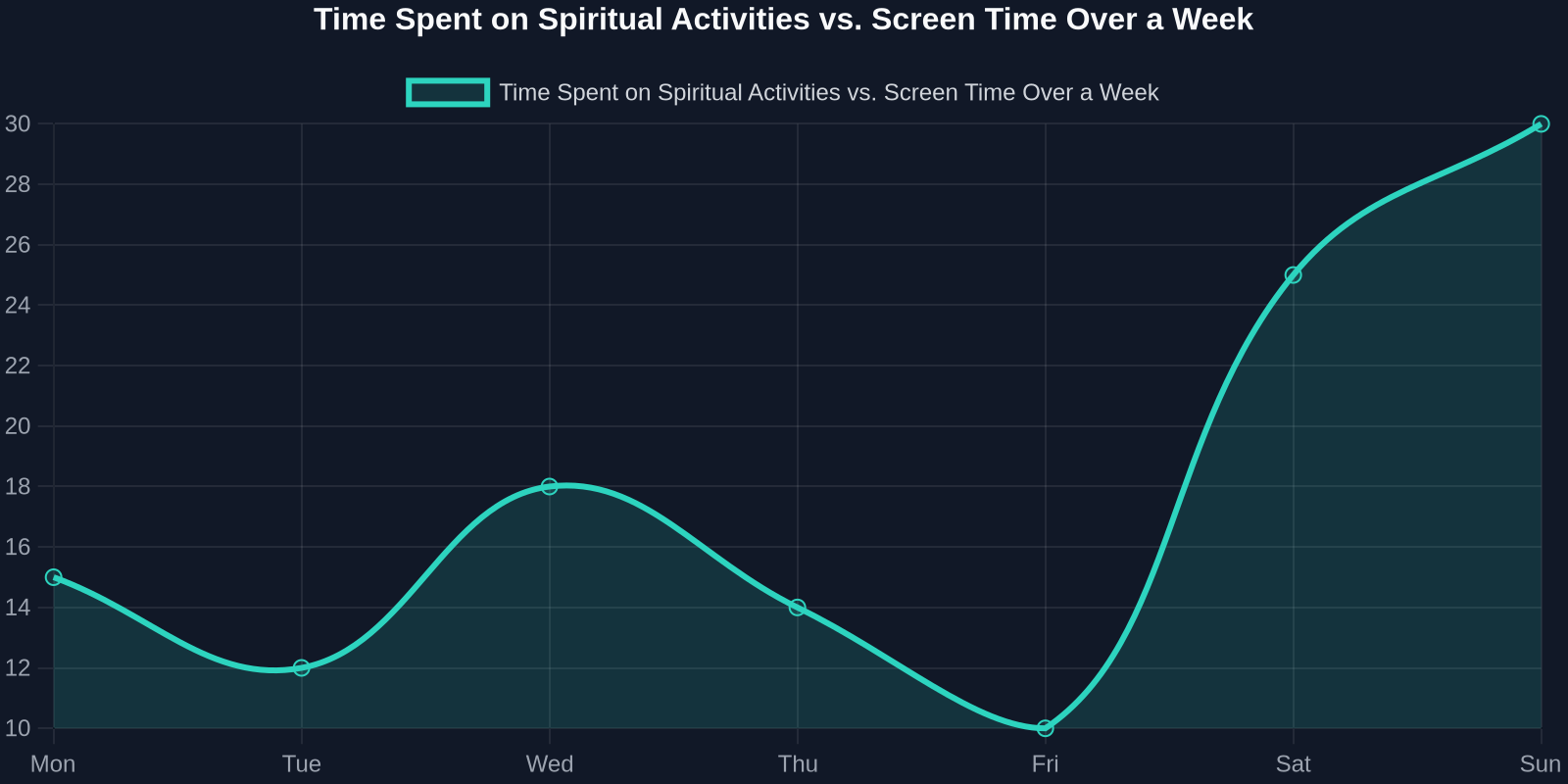
Consider integrating these mini-fasts with the church calendar. During Lent or Advent, many believers already give up something. What if, alongside chocolate or social media, you intentionally set aside the phone each morning using Island and instead meditated on the Isaiah prophecies of Christ’s birth? The gamified element would provide a gentle nudge throughout the season.
For Families: A Shared Island, a Shared Faith
Island’s cooperative design makes it particularly powerful for families. Parents, instead of simply limiting children’s screen time with antagonistic controls, can create a family island where everyone wins together. The family that keeps phones face-down during dinner and devotion time sees their island flourish, a visual parable of what it means to seek first the kingdom.
During family worship, the phone can be placed out of reach. Instead of a rule, the app becomes a catalyst for singing, praying, and reading the Bible together. If a child later sees a lush tree on the screen, the parent can say, “That grew because we chose to listen to God’s Word together.” The digital becomes a servant to the eternal.
Conclusion: A Tree Grows, and a Soul Is Quieted
The Island app is not the first digital wellness tool, nor will it be the last. But its approach, playful, communal, grace-based, aligns beautifully with how God transforms us. He does not crush our will but invites us into a better story. As the prophet Isaiah wrote, “In returning and rest shall ye be saved; in quietness and in confidence shall be your strength” (Isaiah 30:15, KJV).
Modern life is loud. The smartphone, for all its gifts, is a megaphone of worldly noise. Reclaiming the first minutes of the morning for the quiet confidence of prayer is an act of holy defiance. It declares that our identity is not in our productivity or our online persona, but in Christ.
You do not need Island to begin. But if you try it, or even just adopt a simple habit of placing your phone in another room overnight and using a lock screen Bible verse as your sole morning screen, you may find that the tree of your spiritual life grows stronger. One small, daily choice can redirect an entire life.
And if you’re looking for a simple way to put God’s Word literally at the forefront of your day, Vesper offers a calm, uncluttered KJV verse right on your lock screen, a quiet nudge toward the eternal the very first time you glance at your phone.