Italian Archaeologists Discover a Burial Ground Beneath Jerusalem's Church of the Holy Sepulchre: What the Find Adds to Biblical History
Published on October 28, 2026 · 9 min read
Recent archaeological work in Jerusalem has brought new attention to one of the most closely studied sites in biblical history. Italian researchers have identified a burial ground underneath the Church of the Holy Sepulchre, a discovery that matches the Gospel accounts of the location where Jesus was buried. The finding does not claim to resolve every historical question, but it adds another layer of physical context to a place that has drawn pilgrims and scholars for centuries.
For everyday believers, news like this can feel both exciting and overwhelming. Exciting because it touches the story at the heart of Christian faith. Overwhelming because headlines often move faster than careful scholarship. This post walks through what was found, why the site matters, and what the discovery can, and cannot, tell us.
What Was Discovered Beneath the Church of the Holy Sepulchre
According to the report, the Italian team located a burial ground beneath the church floor. The area appears to align with descriptions in the four Gospel accounts: a place outside the city walls, near a garden, with tombs cut into rock. The researchers have not announced the discovery of human remains or a specific ossuary. Instead, the burial ground itself is the focus.
This distinction matters. A burial ground from the first century in that precise location gives historians a clearer picture of how the area was used before and around the time of the crucifixion. It also reinforces the Gospel writers' consistent memory that the burial took place in a rock-hewn tomb close to Golgotha.
The Church of the Holy Sepulchre stands in the Christian Quarter of Jerusalem's Old City. For many Christian traditions, it marks the site of both the crucifixion and the burial. The discovery of a burial ground underneath adds depth to that long-held association.
A Long History of Veneration at the Site
The location now enclosed by the Church of the Holy Sepulchre has a documented history stretching back nearly two thousand years. The Gospel accounts describe it as a garden with a new tomb. Early Christians remembered the place even after Jerusalem's destruction in 70 A.D. And when the Roman Empire became more open to Christian practice, the site was marked and eventually built over.
How the Church of the Holy Sepulchre Came to Be
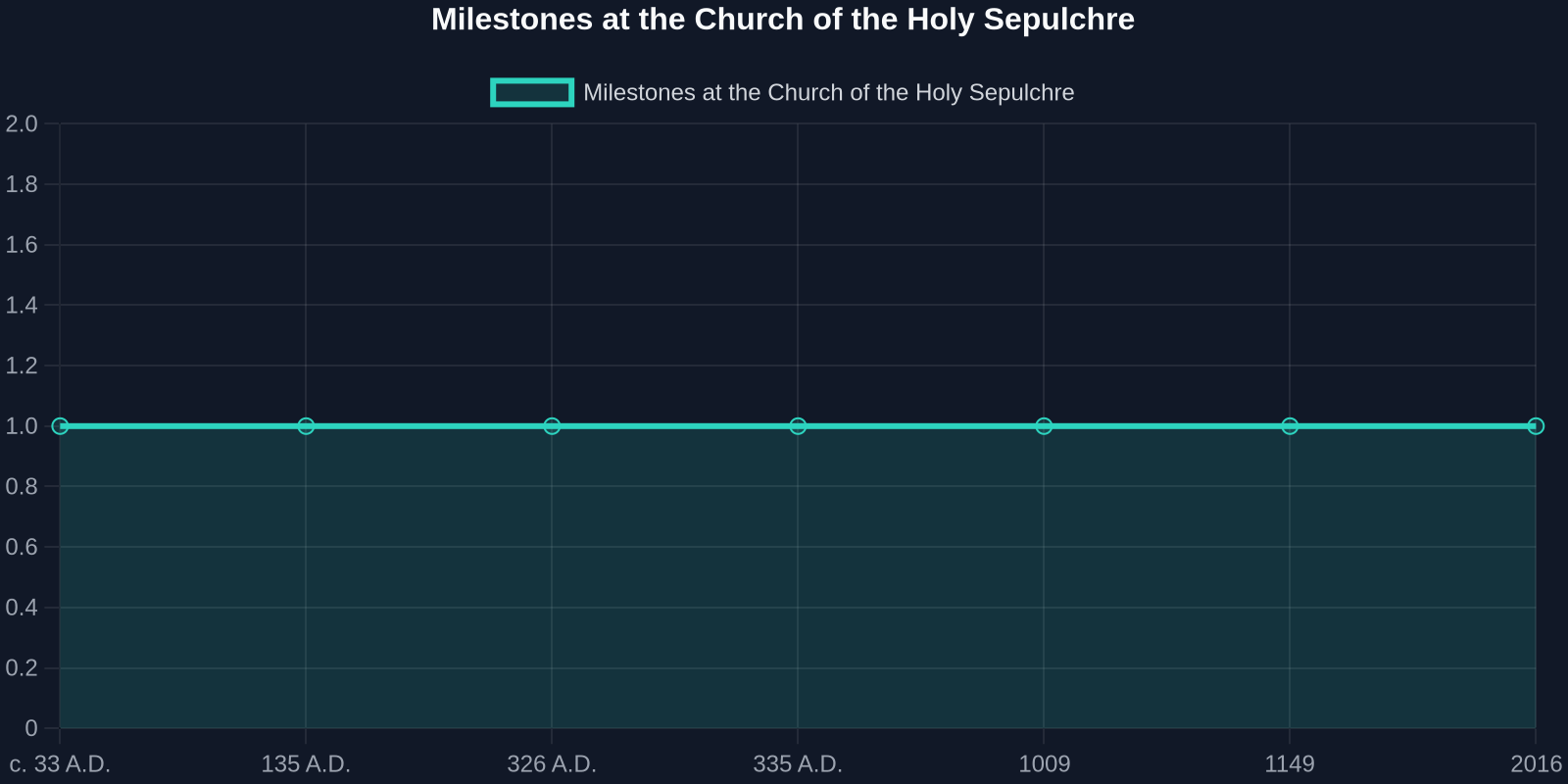
The first known structure on the site dates to the fourth century. According to historical sources, Helena, the mother of the Roman emperor Constantine, visited Jerusalem around 326 A.D. and identified the site. A large church complex was dedicated around 335 A.D. It enclosed both the traditional crucifixion site, Golgotha, and the tomb. Over the centuries, the church was damaged, destroyed, and rebuilt several times. What visitors see today reflects Crusader-era construction and modern restorations.
The 2016 restoration of the Edicule, the shrine that surrounds the traditional tomb, drew global attention. During that work, researchers exposed the original limestone burial bed beneath marble cladding. The recent Italian discovery appears to broaden that picture by revealing a larger burial area beneath the wider church complex.
Why the Burial Accounts Matter to Biblical History
For readers who open the King James Version, the burial is not a minor detail. It appears in all four Gospels with remarkable consistency. Joseph of Arimathea, a member of the council, asks Pilate for the body. He wraps it in linen and places it in a new tomb cut from rock. A stone is rolled over the entrance. The location is near the crucifixion site, in a garden.
Luke records it this way: "And he took it down, and wrapped it in linen, and laid it in a sepulchre that was hewn in stone, wherein never man before was laid" (Luke 23:53, KJV). John adds a geographical note: "Now in the place where he was crucified there was a garden; and in the garden a new sepulchre, wherein was never man yet laid" (John 19:41, KJV).
These details are not incidental. In a first-century Jewish context, bodies were often placed in rock-cut tombs, and burial outside the city was normal. The Gospel writers describe a real-world practice. The discovery of a burial ground beneath the church suggests that the site matched that reality long before the first church was built.
Four Gospel Accounts of the Burial
| Gospel | Burial Detail | Key Emphasis |
|---|---|---|
| Matthew 27:57-60 | Joseph of Arimathea, new rock tomb, stone rolled | Fulfillment and preparation for the resurrection |
| Mark 15:43-46 | Joseph asks for the body, linen cloth, stone | Roman confirmation of death |
| Luke 23:50-53 | A good and just council member, a new tomb | Jesus laid in a tomb where no one had lain |
| John 19:38-42 | Nicodemus, garden tomb, near the crucifixion | The garden and the preparation day |
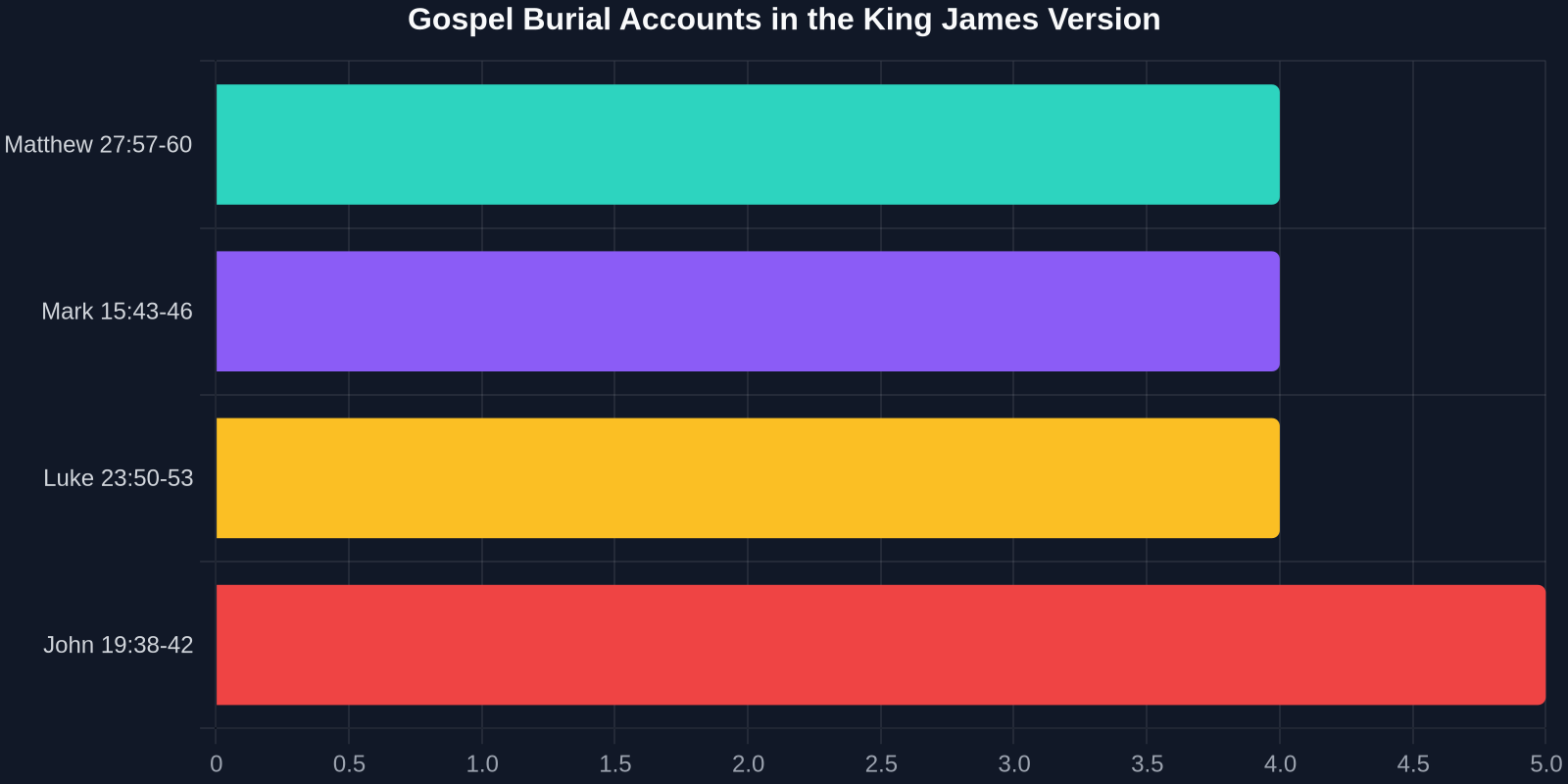
The table highlights how each Gospel includes the same core elements while adding its own emphasis. That shared memory is exactly what archaeologists examine when they study a site like this. If the physical evidence aligns with the textual record, the historical picture becomes clearer.
What the Discovery Does, and Does Not, Prove
Archaeology works with physical remains, not theological claims. A first-century burial ground under the Church of the Holy Sepulchre strengthens the case that this area was used for burials during the time the Gospel accounts describe. It does not, by itself, prove that one specific tomb belonged to Jesus, nor does it prove the resurrection.
This is not a weakness of faith. The Christian hope has always rested on the living Christ, not on a location. As the angel told the women at the tomb, "He is not here: for he is risen, as he said" (Matthew 28:6, KJV). The empty tomb is central, not the structural details of the sepulchre itself.
Still, many believers find that historical discoveries deepen their reading of Scripture. Knowing that the Gospel accounts refer to a real place with real burial customs can make the story more vivid. It can also encourage a slower, more attentive reading of familiar passages.
"And when Joseph had taken the body, he wrapped it in a clean linen cloth, and laid it in his own new tomb, which he had hewn out in the rock: and he rolled a great stone to the door of the sepulchre, and departed.", Matthew 27:59-60 KJV
The Geography of First-Century Jerusalem
One of the most important details in the burial accounts is that the crucifixion took place outside the city gate. The Gospel of John says the sepulchre was near the place of crucifixion in a garden. The writer of Hebrews later reflected on that location: "Wherefore Jesus also, that he might sanctify the people with his own blood, suffered without the gate" (Hebrews 13:12, KJV).
In the first century, the walls of Jerusalem did not enclose the area now occupied by the Church of the Holy Sepulchre. The site lay outside the city, which fits the Gospel record and the requirements of Jewish burial practice. Bodies were not buried within the city walls. Later, as the city expanded, the area came inside the walls. That change of boundaries is one reason some later readers wondered whether the traditional site could be correct. Archaeological study of the ancient walls has helped answer those questions.
The presence of a rock-cut burial ground beneath the church reinforces the old geography. It shows that the area was used for burials when the Gospel events took place. It also aligns with the biblical pattern of bodies laid in tombs hewn from stone, often in family groups and sometimes in gardens. The physical evidence and the written record point in the same direction.
How Archaeology Deepens Bible Reading Without Replacing It
For many Christians, archaeology is not a test of faith. It is a way of paying closer attention to the world the Bible describes. When a discovery matches the biblical account, it can strengthen confidence in the Scriptures. When a discovery raises new questions, it invites patience and deeper study.

The Apostle Paul summed up the core of Christian belief in terms that do not depend on any single archaeological find: "For I delivered unto you first of all that which I also received, how that Christ died for our sins according to the scriptures; And that he was buried, and that he rose again the third day according to the scriptures" (1 Corinthians 15:3-4, KJV). The burial is part of that confession. But the emphasis falls on what God did, not on the location of the stone.
That is why news like this can be received calmly. It does not require a believer to change anything. It simply provides another reason to read the text slowly, with eyes open to the physical world God entered. The garden, the rock, the stone, the linen cloth, these are real things. Scripture does not ask us to ignore them. It asks us to see them in the light of the risen Christ.
A Quiet Habit for This Week
You do not need to travel to Jerusalem to engage with the biblical account. The Gospel writers gave us enough detail to picture the garden, the stone, and the morning after. This week, try a small practice: for five minutes each morning, read one passage from the burial and resurrection accounts. Let the physical details stay with you through the day. If you use an iPhone, Vesper offers a simple way to see a daily KJV verse on the Lock Screen.
Begin with Matthew 27:57-61 on Monday, then Mark 15:42-47 on Tuesday, Luke 23:50-56 on Wednesday, and John 19:38-42 on Thursday. On Friday, read John 20:1-18 and notice how the same garden becomes the place of resurrection. The first day of the week begins with Mary Magdalene coming to the sepulchre while it is still dark. She sees the stone taken away. The detail is physical, but the meaning is spiritual.
"There laid they Jesus therefore because of the Jews' preparation day; for the sepulchre was nigh at hand.", John 19:42 KJV
Archaeological news like this can be a prompt to return to the text. The discovery does not add new doctrine, but it can add new attention. And attention is often the soil where reflection grows.