Pope Leo's Assisi Pilgrimage: 40 Years of Prayer and What It Means for Your Daily Walk
Published on October 9, 2026 · 14 min read

This October, the narrow stone streets of Assisi will once again feel the footsteps of a pilgrim pope. Pope Leo XIV travels to the birthplace of St. Francis to mark four decades since a moment that reshaped how the world understands prayer and peace. In 1986, Pope John Paul II invited leaders from nearly every major faith to this Umbrian hill town for a day of fasting and prayer for peace. It was unprecedented. It was controversial. And forty years later, its echo still rings through Vatican diplomacy, grassroots interfaith work, and the quiet morning prayers of believers worldwide.
For the everyday Christian rushing through a packed schedule, a papal trip to a medieval town might seem remote. But the story of Assisi holds a question each of us faces: In a world of noise, how do we carve out space for God, and how does that space change how we treat the people around us?
What Happened in Assisi 40 Years Ago
On October 27, 1986, the Basilica of St. Francis hosted a sight the world had never seen. Beside Catholic cardinals and Orthodox metropolitans sat Buddhist monks in saffron robes, Sikh delegates in turbans, Muslim imams, Jewish rabbis, Hindu swamis, and representatives of African traditional religions. They did not come to debate doctrine. They came, in John Paul’s words, “to be together and to pray.”
The day was built on a clear distinction: they prayed in each other’s presence, not together in a syncretic service. Each faith group withdrew to separate spaces for their own prayer. Afterwards, they gathered publicly to commit to peace. That distinction calmed some theological objections but the images alone were revolutionary. For many traditional Catholics, it raised alarms about indifferentism, the idea that all religions are equal paths. For others, it was a prophetic sign that believers who differ on eternity can still cooperate on earth.
John Paul himself addressed the tension in his closing remarks: “The fact that we have come here does not imply any intention of seeking a religious consensus among ourselves… The very unity we share depends on the fact that we believe in one God.” For monotheistic faiths with Abraham as a common ancestor, it was a family reunion. For others, it was an act of human solidarity before the mystery each tradition names differently.
The Backdrop That Made It Urgent
1986 was not a peaceful year. The Cold War still chilled global politics. Regional conflicts simmered on nearly every continent. Terrorism dominated headlines. John Paul, who lived through Nazi occupation and communist repression in Poland, sensed that religious voices had been sidelined in the public square. Peace had become a purely political project, and it wasn’t working.
His insight was that prayer itself is a peacemaking act. It quiets the soul, humbles the proud, and turns the eyes outward toward the needs of others. When a person kneels in prayer, they are already disarming something within themselves. The Assisi gathering scaled that personal experience to a global stage.
Why Pope Leo Returns Now
Pope Leo XIV was not yet a bishop when the first Assisi day unfolded. He has, however, spoken repeatedly about picking up threads from both John Paul II and Francis of Assisi. His choice to commemorate the anniversary signals continuity, and an acknowledgment that the world still needs visible reminders that people of faith can choose dialogue over division.

His visit arrives during a year when the Franciscan family is already celebrating the 800th anniversary of St. Francis’s death and his enduring spiritual legacy. By standing in Assisi, Pope Leo links the 13th-century saint’s radical simplicity with the 20th-century pope’s bold interfaith experiment, and draws both into the present moment.
Assisi has a way of stripping things down. St. Francis famously renounced his inheritance, even returning the clothes on his back to his wealthy father, to live penniless and preach peace. The town’s very stones seem to ask every visitor: What are you holding onto that keeps you from God and from loving your neighbor fully?
The Unfolding Story of Interfaith Prayer Since 1986
The 1986 Assisi day was not an endpoint. John Paul convened a second gathering in 2002, held in the shadow of 9/11, where the atmosphere was heavier, the urgency sharper. Benedict XVI, who as Cardinal Ratzinger had voiced reservations about the first gathering, returned to Assisi in 2011 as pope for the 25th anniversary, carefully framing it as a pilgrimage for truth and peace rather than a repeat of 1986’s format. Pope Francis, whose very name aligns him with the town, visited multiple times and regularly hosted interfaith audiences in Rome.
Now Pope Leo steps into this layered history. He brings his own perspective, shaped by years of pastoral work far from the corridors of Vatican diplomacy. Observers will watch his words carefully, but for everyday believers, the core message remains startlingly practical: peace is built person by person, prayer by prayer.
A Snapshot of Interfaith Engagement Among Ordinary Christians
While papal events draw headlines, the quiet tide of everyday interfaith interaction reaches far more lives. Surveys suggest a growing openness among Christians to connect with neighbors of other faiths, even as formal theological dialogue remains the province of specialists. Consider the patterns that researchers are tracking:
| Area of Interfaith Life | Decades Ago (1980s–90s) | Today (2020s) |
|---|---|---|
| Daily proximity to people of other faiths | Limited, often clustered in urban centers | Common across suburbs and small towns as migration and media shrink distance |
| Christian attitudes toward interfaith prayer events | Widespread suspicion in many denominations | Growing acceptance, especially among younger adults, though theological debates continue |
| Local clergy collaboration on social issues | Rare and often formal | Increasingly routine around food banks, disaster response, and addiction support |
| Average Christian's prayer for peace | Often abstract, 'world peace' in general terms | More specific, peace for a named neighbor, a tense workplace, or a struggling community |
What this table hints at is something deeper than a change in theology. It reflects a change in daily life. Most Christians today live next door, work beside, and parent alongside people of other faiths. The question is not whether we coexist, but whether we move from coexistence to active peace-building.
The Spiritual Discipline That Underpins It All
The 1986 gathering’s deepest insight was not geopolitical. It was personal. Peacemaking requires peace-filled people. And peace-filled people are formed in prayer.
St. Francis understood this. His famous prayer, “Lord, make me an instrument of thy peace”, does not begin with grand actions. It begins with a request that God transform the person praying: where there is hatred, let me sow love; where there is injury, pardon; where there is doubt, faith.
“Blessed are the peacemakers: for they shall be called the children of God.”
, Matthew 5:9 (KJV)
This Beatitude sits at the center of the Christian vision of peace. It does not say blessed are those who wish for peace, or who talk about peace, or who vote for policies labeled “peace.” It says blessed are the makers, the ones who craft it with their words, their choices, their willingness to absorb injury rather than multiply it.
The Assisi popes understood that even the most accomplished diplomats cannot manufacture peace among nations if ordinary believers do not manufacture peace in their own hearts first. Prayer is the workshop where peace is forged.
Why Morning Prayer Matters Specifically
Researchers in psychology and spiritual formation increasingly point to the first moments of the day as disproportionately formative. Whatever shapes our attention at waking tends to shape our responses for hours afterward. For Christians, that insight aligns with ancient wisdom. The Psalmist wrote, “My voice shalt thou hear in the morning, O LORD; in the morning will I direct my prayer unto thee, and will look up” (Psalm 5:3, KJV).
The habit is simple but the barrier is real: our phones buzz with emails, social feeds, headlines designed to provoke. A decision made the night before, to place Scripture where the eye first falls, can redirect the whole day’s current.
What St. Francis Himself Teaches a Busy 21st-Century Christian
The 800th anniversary of his passing calls us beyond nostalgia. St. Francis is often sentimentalized, a garden statue with a bird on his shoulder. The real Francis was fiercer. He kissed lepers when every instinct recoiled. He preached to the sultan in the middle of a Crusade. He rebuilt broken churches with his own hands. He owned nothing and carried peace into places where it made no worldly sense.
His example presses a question on the modern believer who juggles work, family, bills, and church commitments: Can peacemaking become a daily rhythm rather than an occasional event?
Scripture suggests it can. St. Paul’s letters are filled with small directives that shape large outcomes:
“And let the peace of God rule in your hearts, to the which also ye are called in one body; and be ye thankful.”
, Colossians 3:15 (KJV)
That verb “rule” translates a Greek word used for an umpire or arbitrator. Paul pictures the peace of God as the inner official who settles disputes within the heart before they spill outward. That inner work is what the Assisi vision, across all its iterations, has always pointed toward.
Small Franciscan Habits for a Busy Life
Not everyone can sell their possessions and preach in the streets. But small adjustments carry the same spirit:
- Greet the day with Scripture before screens, even one verse, read slowly, sets a different tone than a news alert.
- Choose one relationship this week where tension lingers and silently pray for that person each morning.
- Speak peace aloud: a blessing over a meal, a word of thanks to a coworker, a quick prayer with a child at bedtime.
- Practice material simplicity in one small area, a closet cleaned out and given away, a meal skipped to donate the cost, a purchase delayed to break the impulse cycle.
These actions don’t make headlines like a papal visit. But across millions of quiet lives, they stitch the fabric that the big gatherings celebrate.
The Geography of Assisi and What It Symbolizes
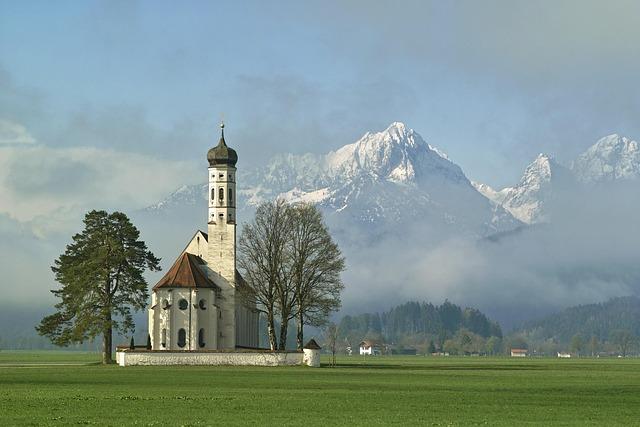
Assisi sits on a slope of Mount Subasio, visible for miles across the Umbrian plain. Its basilica is a dual-level structure: the lower church dark and crypt-like, the upper church flooded with light and frescoed with stories. That architecture itself preaches a sermon. Peace requires descending into darkness, into honest acknowledgment of our own shadows, wounds, and failures, before ascending into light.

Pilgrims who walk those stones often report a similar experience: the town does not let you remain a spectator. It pulls you into something. Assisi is not a museum of medieval spirituality; it operates as a living retreat house.
Pope Leo’s visit will be brief, but his presence there connects the global church to a place that embodies a truth larger than any single papacy: God can use one person’s complete surrender to spark a movement that outlasts empires. Francis was one man. His obedience rippled across eight centuries and now shapes a pope’s itinerary in 2026.
How 40 Years Have Changed Interfaith Prayer, and What Hasn’t Changed
Since 1986, interfaith gatherings have proliferated. Local councils of churches, synagogues, and mosques meet regularly in many cities. Charity coalitions cross religious lines routinely. Social media exposes believers to the prayers and practices of other traditions daily, whether they seek that exposure or not.
What has changed is frequency and familiarity. What has not changed is the central tension John Paul navigated in 1986: how do you honor the truth claims of your own faith while genuinely welcoming the presence of people who hold different truth claims?
That tension is not a bug. It is a feature of honest dialogue. The Christian who enters an interfaith setting neither checks her convictions at the door nor uses them as a weapon. She follows the instruction Peter gave to the early church: “Be ready always to give an answer to every man that asketh you a reason of the hope that is in you with meekness and fear” (1 Peter 3:15, KJV). Meekness and fear, gentleness and reverence, are the non-optional ingredients.
The Fruit in a Pope’s Own Life
Pope Leo XIV, reflecting on the 100-year-old tradition of World Mission Sunday established by Pope Pius XI, has shared that the missionary vision “has borne fruit in my own life.” That personal note matters. Papal events are not merely institutional gestures. They grow from the soil of individual spiritual formation. The pope visiting Assisi is not just performing a role; he is a Christian who has been shaped by the same Scriptures, the same call to peace, the same daily disciplines available to every believer.
Bringing Assisi Home: A Daily Peace Rhythm
Not everyone can stand in the piazza of Assisi this October. But the spiritual logic of the event is portable. It travels into kitchens, cubicles, carpool lanes, and the quiet minutes before the rest of the house wakes. The cycle is ancient and tested: receive peace from God in prayer, carry it into encounters, return to prayer, repeat.
The 1986 Assisi day was dramatic because it gathered dignitaries. But its premise was democratic. It assumed that prayer matters, that prayer changes the one who prays, and that changed people are the only reliable building blocks of peace.
That assumption holds in 2026 as much as it did in 1986. The anxieties have new names, the screens are brighter, but the solution, if we can call it that, remains a gift received on our knees.
If you want to weave this spirit into your own days, the simplest step is often the most overlooked: let your first glance each morning land on Scripture, not on the world’s headlines. Many believers use a daily Bible verse widget on their phone’s Lock Screen to replace the usual scramble for news with a steady, quiet word from God. This small shift doesn’t recreate Assisi, but it brings Assisi’s first principle, prayer before action, right into the pocket where your phone already lives.
Conclusion: What a Medieval Town Offers a Modern Soul
Assisi endures not because it is picturesque, though it is, but because it tells a story the weary world still needs. A rich young man stripped himself of everything and found everything. A pope stepped onto a platform with leaders of other faiths and widened the imagination of millions. And now another pope returns to say, in effect, that the story is not finished.
Your part in that story may seem small. A morning prayer. A forgiving word. A moment of silence where there could have been sharpness. These are the tiny stones from which the house of peace is built. St. Francis rebuilt San Damiano chapel one stone at a time. Believers rebuild peace in their homes and neighborhoods the same way.
“Depart from evil, and do good; seek peace, and pursue it” (Psalm 34:14, KJV). Forty years ago, a pope and dozens of religious leaders gathered in Assisi to pursue it publicly. Today, you pursue it in the hour ahead of you. The same God who met Francis on that hillside meets you where you are.