Quiet Stability, Shifting Souls: What Pew’s Latest Study Means for Your Daily Walk
Published on November 5, 2026 · 11 min read

Pew Research Center recently released its updated portrait of religion in the United States, and the headline offers a moment to exhale: religious identity in America remains broadly stable. But beneath that placid surface, the data reveals a generation sending quieter, more complex signals. For everyday Christians trying to weave Scripture into chaotic mornings and connect with children who ask hard questions, these mixed signals are not abstractions, they are the texture of family dinners, the silence of a prayer request unspoken, and the gentle nudge to start the day with God rather than a notification screen.
The report, "Religion Remains Stable in the U.S., with Mixed Signals for Young Adults," does not alarm. It invites reflection. It charts a nation where the rate of religious disaffiliation has slowed for the first time in years, yet where younger adults describe faith in language their grandparents might not recognize. This post walks through the core findings with a calm, pastoral eye, offering no partisan analysis, no denominational scorekeeping, only a grounded consideration of how these shifts might shape a quiet, faithful life today.
The Big Picture: A Plateau, Not a Cliff
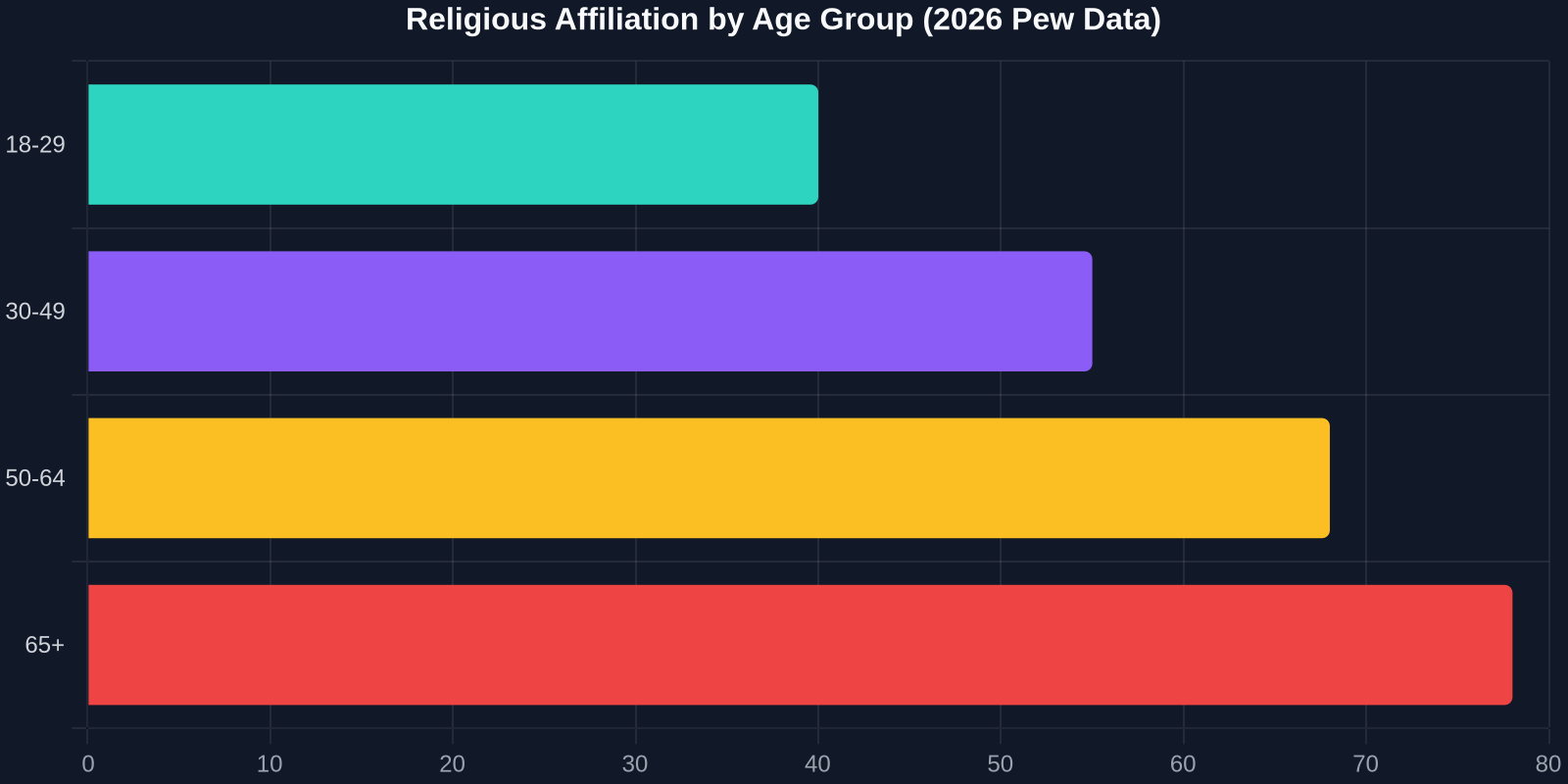
After decades of tracking a steep decline in religious affiliation, sociologists have watched for a leveling-off point. The 2026 data suggests that moment may have arrived. The share of Americans who identify as Christian, religious "nones," and members of other faith traditions has not moved dramatically in recent cycles. This stability does not mean every tradition is thriving equally, but it does mean the narrative of inevitable secularization deserves a pause.
For the believer who worries that the culture is slipping away, this number offers a gentle reassurance. The physical church has not emptied overnight. But it also issues a quiet call: stability is not the same as vitality. The structure remains; the question is whether the daily practice of faith is deepening within those walls. "Be still, and know that I am God" (Psalm 46:10) applies to churches, not only to souls. A plateau can be a place of rest before renewal, or a comfortable spot to fall asleep.
Young Adults: The Mixed Signals Matter
The most textured section of the Pew report examines adults under 40. Here, the data is neither grim nor celebratory; it is mixed, which is itself a kind of hopeful truth. Mixed signals suggest conversation, not a closed door.

Stability among the unaffiliated does not tell the whole story. Many young adults who check "none" on a survey still pray. They still wonder about purpose. They still long for a silence that technology cannot fill. The signal is mixed because young people are mixing things: inherited practices with new questions, skepticism with a palpable spiritual hunger.
For parents and grandparents reading this, the data invites a posture of curiosity rather than panic. A young adult who steps back from institutional religion is not necessarily stepping away from God. They may be stepping away from a version of faith they find brittle or unexamined. The prophet Jeremiah spoke of a God who writes the law on hearts, not stone (Jeremiah 31:33). Perhaps this generation is asking what that handwriting looks like in an anxious, screen-lit age.
Prayer Persists, Even When Pews Empty
One of the most overlooked findings involves the persistence of personal prayer. Even among the unaffiliated, a significant share report praying at least monthly. The act of speaking into silence, or crying out in traffic, has not vanished. It has migrated out of sanctuaries and into cars, bedrooms, and the quiet pauses between notifications.
This migration is important. It means the seed of faith remains scattered widely, even if the formal gardens look a little different. "But thou, when thou prayest, enter into thy closet, and when thou hast shut thy door, pray to thy Father which is in secret; and thy Father which seeth in secret shall reward thee openly" (Matthew 6:6). The King James phrasing "thy closet" suggests a private space. For many young adults, that closet is a Lock Screen, a commute, or a moment stolen before the world demands attention.
Daily Habits in a Stable but Shifting Landscape
If the national picture is stable, the personal picture remains a daily choice. Habits form the bridge between identity and lived faith. The believer who identifies as Christian but never opens Scripture lives in a quiet disconnect. The good news is that the disconnect is easier to mend than we imagine.
| Daily Habit | Driven by Algorithm | Shaped by Scripture |
|---|---|---|
| First thought in the morning | Check email, news alerts | See a verse before any other input |
| Midday reset | Scroll social media | Recall the morning verse and pray briefly |
| Evening reflection | Stream shows to unwind | Read a Psalm aloud, even one line |
The table above is not about guilt. It is about the architecture of a day. We build our lives on small, repeated decisions. "Thy word have I hid in mine heart, that I might not sin against thee" (Psalm 119:11). Hiding requires placing. A verse seen once in the morning works its way into memory and disposition. By evening, it has traveled with you, through the difficult meeting, the kind stranger, the moment of frustration in the checkout line.
Scripture Engagement: The Quiet Anchor
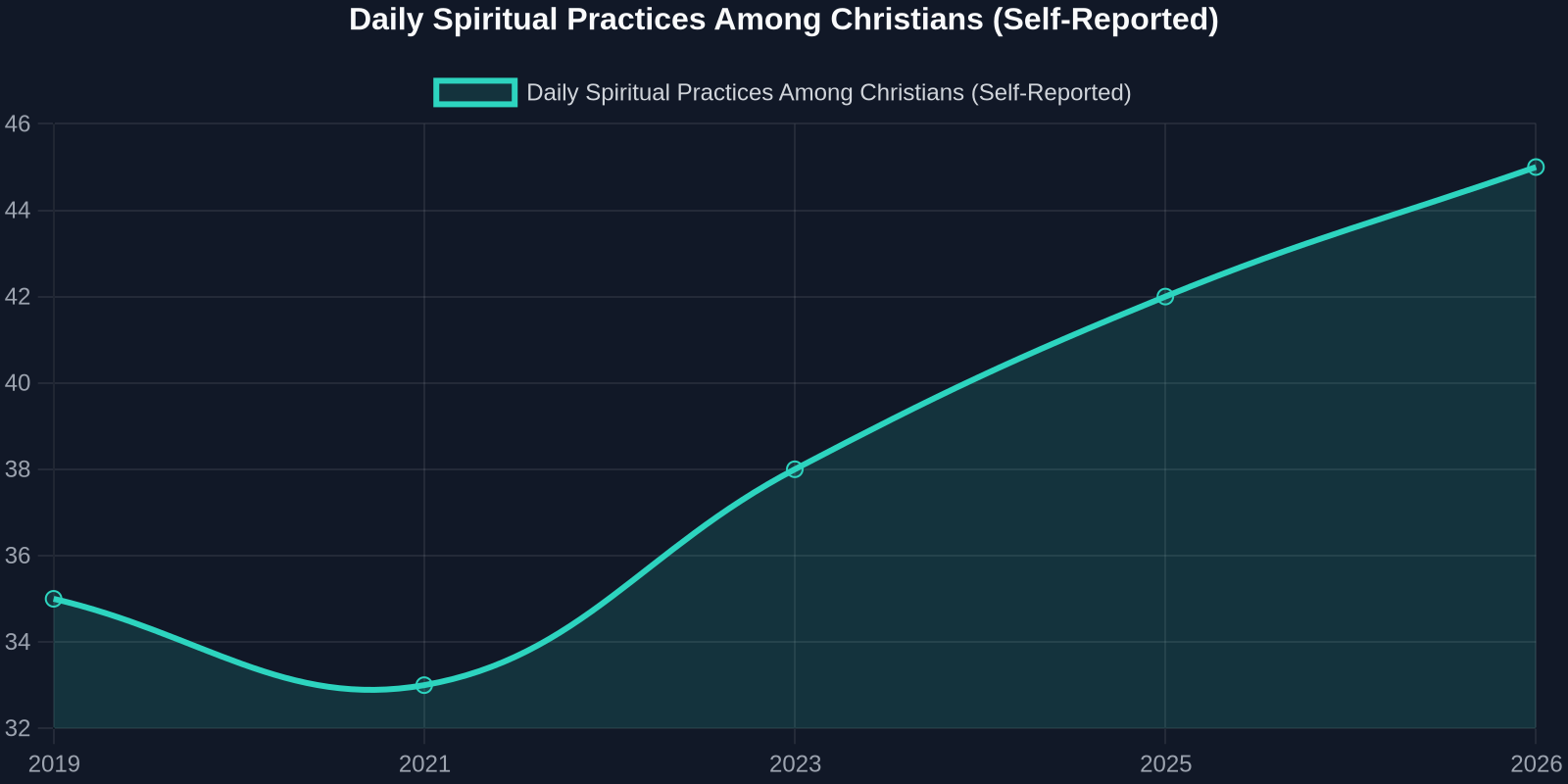
Pew's report does not measure daily Bible reading directly, but its theme of stable identity with mixed practice invites the question: how do we engage Scripture in a year like this? For centuries, believers have turned to the rhythms of the lectionary, the discipline of memorization, or the simple habit of reading one chapter a day. Technology has added a layer to these ancient practices, for better and worse.

There is a quiet power in starting small. A widget on a phone screen is not a sermon. It is not a Bible study. It is a seed, dropped into the soil of a busy morning. Over time, a single verse can become a doorway. The believer might find herself reading a few more verses. She might look up the context. She might simply carry the phrase through the day like a stone in her pocket, smooth and grounding.
For those who love the King James Version, the language itself has a way of slowing thought. "The Lord is my shepherd; I shall not want" (Psalm 23:1) feels different than modern paraphrases. Its cadence lingers. A daily KJV verse offers that cadence without requiring a thick physical Bible to be opened at dawn. It meets a person where she already is, glancing at her screen, and speaks a word from a different register entirely.
The Mixed Signals of Community
Another finding in the report touches on congregational life. While overall church attendance has declined over decades, the rate of decline has softened. Many congregations report a mix of older faithful members and a smaller, curious younger cohort. This mix can be awkward. Hymn preferences clash. Sermon styles differ. Yet the awkwardness may be holy ground.
The apostle Paul described the church as a body with many members (1 Corinthians 12:12). A body with only one kind of member would not be a body at all. Mixed signals within a stable religious landscape might mean the body is still alive, still adjusting, still growing in fits and starts toward a healthier whole.
What This Means for Your Morning Routine
News about national trends can feel distant. The real question is what happens tomorrow morning. Will the first thing you see be a headline designed to provoke anxiety, or a word designed to root you in peace?

While this particular statistic comes from broader survey data on morning routines, it aligns with the Pew report's implication: identity needs daily nourishment. Stable religious identity is a gift, but a gift that requires opening. A Christian who identifies as such but never engages Scripture is like a person who owns a garden but never walks in it. The garden is still there. But its fragrance and fruit go ungathered.
Vesper offers one simple way to keep that garden within sight. A King James Verse on your Lock Screen each day helps you start the morning with God rather than with the world's demands.
"It is of the Lord's mercies that we are not consumed, because his compassions fail not. They are new every morning: great is thy faithfulness."
, Lamentations 3:22-23
These verses from Lamentations capture the spirit of a steady faith in an unsteady world. Mercies arrive fresh each morning. The question is whether we position ourselves to receive them. A Lock Screen widget cannot manufacture mercy, but it can turn the face toward it. Like a church bell ringing faintly in a city, it reminds: there is something older, quieter, and more real than the inbox.
The Long View: Faithfulness Over Flash
The Pew report covers a snapshot in time, but Christians live in a story that spans millennia. The stability measured in 2026 matters less than the stability of a soul anchored in God. Trends rise and fall. Young adults will age. The "nones" of today may become the deacons of tomorrow. The work of the believer is not to forecast but to be faithful.
Consider the farmer in Jesus's parable of the sower (Matthew 13). Seed falls on different soils, and only some yields grain. The sower does not despair over the path or the rocky ground. He sows. So too, the everyday Christian can sow small acts of devotion, a verse read, a prayer whispered, a kindness shown, without obsessing over the national yield.
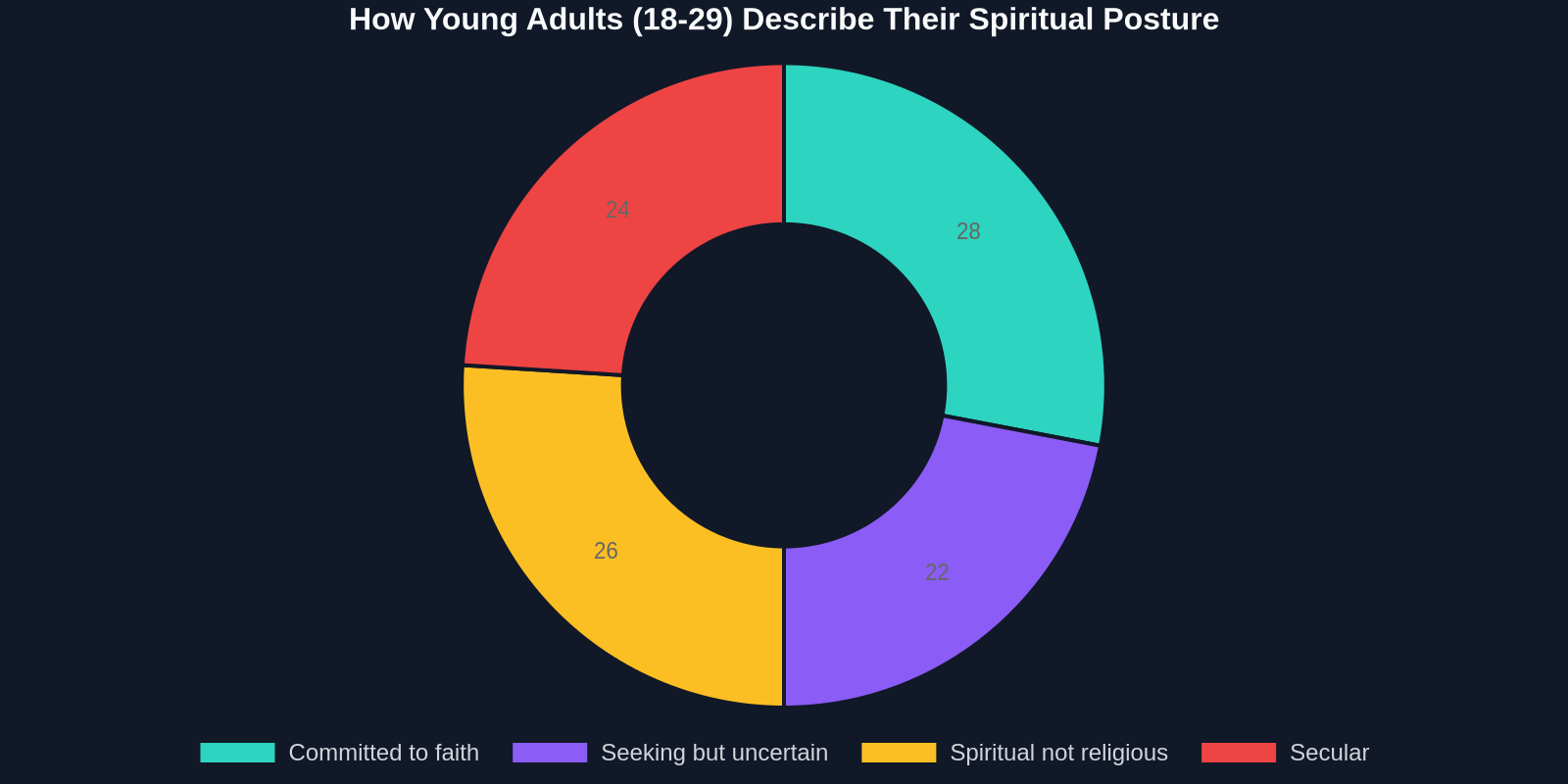
Faithfulness includes attention to those around us. The mixed signals from young adults invite a response: not debate, but presence. A mother who calmly reads a Psalm at breakfast, without demanding her teenager join, sows something. A coworker who declines to mock faith, gently, sows something. A friend who texts a Scripture verse rather than a political headline sows something. The seed may take years to break ground. The sower is not in charge of the germination schedule.
Practical Reflections for This Week
Given what the data shows, a stable religious landscape with nuanced generational shifts, here are a few practical invitations. None requires a large life overhaul. None carries a political or partisan edge. Each is a small seed.
- Monday: Before checking any other app, read the daily verse on your phone screen aloud. Let the sound of the King James language fill the room.
- Tuesday: If you interact with a young adult, your child, a coworker, a barista, ask a gentle, open question about what they think of spiritual matters. Then listen without correcting.
- Wednesday: Memorize the first half of Psalm 23. Write it on a sticky note. Place it where you will see it at lunch.
- Thursday: Fast from news media for one day. Replace that attention with five minutes of silence after the morning verse.
- Friday: Text one person a single line of Scripture that comforted you this week. No commentary needed.
These small acts build a life. The national statistics will continue to shift, but the quiet center of a lived faith remains. "Therefore, my beloved brethren, be ye stedfast, unmoveable, always abounding in the work of the Lord, forasmuch as ye know that your labour is not in vain in the Lord" (1 Corinthians 15:58).