Quiet Strength on Set: What KJ Apa Learned from Jimmy Stewart’s Faith
Published on November 8, 2026 · 14 min read

Hollywood often celebrates the loud and the flashy. Yet a new project turns the spotlight toward something remarkably different: a quiet, private faith that sustained one of cinema’s most beloved leading men. Actor KJ Apa, known to millions from his television work, has been preparing to step into the shoes of James “Jimmy” Stewart, the World War II bomber pilot, the Oscar winner, the man behind classics like It’s a Wonderful Life and Mr. Smith Goes to Washington. What Apa discovered in his research wasn’t just a collection of charming mannerisms or a familiar drawl. It was a deeply rooted Christian faith that shaped Stewart’s character far beyond the screen. For everyday believers, the story offers a gentle prompt: our most powerful witness is often not what we say, but who we consistently are.
Stewart’s faith was never a performance. It was the scaffolding beneath the man. In an age when public personas are carefully curated and digital platforms reward constant visibility, the Pennsylvania-born actor modeled a different rhythm. He attended All Saints’ Episcopal Church in Beverly Hills with his wife Gloria for decades. He prayed before filming difficult scenes. He read Scripture as part of his morning routine. And he rarely made a show of any of it. As Scripture reminds us, a life built on Christ doesn’t require a spotlight to hold firm: “Therefore whosoever heareth these sayings of mine, and doeth them, I will liken him unto a wise man, which built his house upon a rock” (Matthew 7:24, KJV).
The new daytime series featuring Apa’s performance is already generating interest, but the deeper resonance lies in the connection the young actor felt to Stewart’s inner life. In interviews, Apa has spoken not about religious controversy or theological debate, but about the simple, steadfast hope that kept Stewart grounded through war, grief, and the pressures of fame. That kind of hope isn’t reserved for Hollywood legends. It is offered to every person trying to navigate a demanding schedule, a heavy heart, or a noisy world.
A Craft Rooted in Conviction: How Faith Shaped Stewart’s Work
When we think of acting, we rarely think of the soul. But for Jimmy Stewart, the two were inseparable. His approach to even the most beloved comedic roles or the darkest dramatic turns was informed by a worldview that took sin, redemption, and grace seriously. He believed people were flawed, himself included, but never beyond the reach of mercy. That conviction gave his characters a vulnerability that still resonates. Consider George Bailey in It’s a Wonderful Life, a man driven to the edge of despair who discovers his own worth through the love of others. The performance wasn’t just technical skill; it was an overflow of a man who understood what it meant to be saved.
For the modern professional, whether in a creative industry, a corporate office, or a home filled with children, the principle is the same. Our deepest convictions can’t help but seep into our work. When we operate from a place of grounded faith, our daily tasks carry a different texture. They become less about self-promotion and more about service. They are done with patience, with honesty, with a willingness to extend grace when things go wrong.
Stewart’s father, who ran a hardware store in Indiana, Pennsylvania, was a Presbyterian elder who taught his son that a man’s word was his bond. Those lessons carried into adulthood. The actor developed a reputation as one of the most reliable, uncomplaining professionals in the business. Directors knew he would arrive prepared. Crew members knew he would treat them with respect. It’s a quiet but radical posture in any industry: to be known less for what you demand and more for what you faithfully give.
His military service only deepened his reliance on God. Stewart flew 20 combat missions over Nazi-occupied Europe as a bomber pilot with the U.S. Army Air Forces. He rarely spoke of the horrors he witnessed, but those who knew him best said the experience stripped away any remaining pretense. He emerged with a profound understanding of Psalm 46:10: “Be still, and know that I am God” (KJV). The Psalms in particular became a source of comfort, a way to process what words could not capture.
Praying Before the Cameras Rolled: A Practice of Dependence
One detail that surfaced as KJ Apa studied Stewart was the actor’s pre-filming ritual. Before particularly challenging scenes, Stewart would often retreat to a quiet corner and pray, not for personal glory, but for the humility to tell the story truthfully. This wasn’t superstition or performance anxiety dressed up in religious language. It was an acknowledgment that his own strength had limits, and those limits were best surrendered to a sovereign God.

Modern believers might blush at the idea of praying over a spreadsheet, a lesson plan, or a sales call. But the invitation to “pray without ceasing” (1 Thessalonians 5:17, KJV) doesn’t exclude the ordinary responsibilities of our working hours. It sanctifies them. A short, silent prayer before a difficult conversation or a complex task reorients the heart. It reminds us that our identity is not measured by the outcome of the next meeting, but by the One to whom we belong.
Stewart’s prayer practice was never about public visibility. Unlike modern messaging that can pressure us to “share our testimony” at every opportunity, his faith was profoundly integrated and remarkably discreet. The fruit of it was visible to those paying attention, but the root system remained hidden in the soil of daily, private devotion. For the introvert, for the private person, for the believer who wonders if quiet faith counts, Stewart’s life answers with a reassuring yes.
The Private Devotion of a Public Figure: A Modern Mirror
In our era of constant connectivity, we are often told that if something doesn’t appear online, it didn’t happen. Faith, too, can feel pressured to become content, a posted Bible verse, a church photo, a carefully worded statement. Stewart’s generation lived differently. He owned a well-worn Bible, not a smartphone. He sat in a pew, not in front of a livestream chat. He gave to his church quietly, without a press release.
This is not to dismiss modern tools; they can be beautiful means of encouragement. But it is to ask whether the substance of our spiritual life is robust enough to survive without an audience. Would we still pray if no one saw our prayer request? Would we still serve if we couldn’t post a photo? Stewart’s enduring legacy suggests that the healthiest faith is often the one cultivated in secret, described by Christ Himself: “But thou, when thou prayest, enter into thy closet, and when thou hast shut thy door, pray to thy Father which is in secret; and thy Father which seeth in secret shall reward thee openly” (Matthew 6:6, KJV).
The young actor KJ Apa, stepping into this story, represents a generation navigating visibility in unprecedented ways. His recognition of Stewart’s faith as a sustaining force, not an accessory, may indicate a hunger for something more substantial than a curated image. There’s a weariness with performative authenticity. People are drawn to the real thing: a life that works, not just a message that sounds good.

This longing isn’t unique to celebrities. In every community, believers face the tension between external reputation and internal reality. The spiritual disciplines that sustained Stewart, Scripture reading, prayer, corporate worship, private generosity, are the same disciplines available to us. They don’t require a Hollywood contract. They require a willing heart and the humility to begin each day dependent on God’s mercy.
When Life’s Script Took a Hard Turn: Grief and Resilience
Stewart’s faith was not tested in an easy life. He lost his stepson, Ronald, a Marine lieutenant, in the Vietnam War in 1969. It was a crushing blow. By that point, Stewart was an aging icon, yet the grief nearly unraveled him. His wife Gloria later said that his faith was the only thing that kept him tethered. He didn’t respond with tidy theological answers or public declarations. He simply held on, to the Psalms, to his church community, to the prayers of friends.

“Yea, though I walk through the valley of the shadow of death, I will fear no evil: for thou art with me; thy rod and thy staff they comfort me.”, Psalm 23:4 (KJV)
In times of suffering, the temptation is to demand explanations or to grow bitter when none come. Stewart modeled a plodding, persistent faith that refused to let go of God even when He felt distant. For anyone walking through grief, a lost job, a broken relationship, a diagnosis, this witness is profoundly comforting. The valley does not mean God has abandoned you. The Shepherd is present even when the path is dark.
Grief also clarified Stewart’s priorities. Colleagues noticed he became more tender with younger actors, more patient on set, more deliberate about expressing affection. Suffering, when held in faith, can become a strange instrument of compassion. It carves space within us for others. The Apostle Paul captures the paradox well: “Blessed be God, even the Father of our Lord Jesus Christ, the Father of mercies, and the God of all comfort; Who comforteth us in all our tribulation, that we may be able to comfort them which are in any trouble, by the comfort wherewith we ourselves are comforted of God” (2 Corinthians 1:3-4, KJV).
What This Means for a Demanding Day: Integrating Faith into a Full Schedule
The Christian Post’s coverage of the upcoming series has prompted conversations not just about entertainment, but about how faith sustains real people in demanding professions. The reader facing a packed calendar, early-morning meetings, and evening responsibilities might wonder where God fits in the margins. Stewart’s life suggests that integration, not compartmentalization, is the key.
| Daily Rhythm | Distracted Pattern | Integrated Pattern (Stewart’s Model) |
|---|---|---|
| First Action of the Day | Check phone notifications | Quiet prayer and Scripture |
| Before a Major Task | Anxiety and over-preparation | Brief prayer for humility |
| In Failure | Self-criticism or blame | Honest confession and release |
| In Success | Personal pride | Gratitude to God and others |
| Evening Wind-Down | Mindless scrolling | Examen: where was God today? |
Notice that this integrated pattern doesn’t demand hours of monastic silence. It asks for intentional moments. It treats the transitions in our day, the time between tasks, as opportunities for reorienting the heart. For someone trying to start the morning with God instead of scrolling, even a single verse can anchor the whole day. The wisdom of Lamentations 3:22-23 speaks exactly to this daily renewal: “It is of the Lord's mercies that we are not consumed, because his compassions fail not. They are new every morning: great is thy faithfulness” (KJV).
The modern office or home isn’t so different from a 1940s film set. Both environments carry pressure. Both require us to show up and perform tasks we don’t always feel equipped for. Both can pull us toward ego or despair, depending on the hour. Stewart’s secret wasn’t that he escaped pressure. It’s that he faced it while leaning on a power greater than his own. That leaning is a skill we can cultivate, one small habit at a time.
Real Faith in an Artificial Age: The Witness of Consistency
KJ Apa’s preparation for the role has required him to study not just an accent, but an interior posture. In a culture saturated with artificial intelligence, algorithm-driven identities, and the pressure to project an idealized self, the appeal of a consistent, integrated life is countercultural. Jimmy Stewart’s faith was attractive precisely because it didn’t shift with popular opinion. Hebrews 13:8 provides the theological anchor for such stability: “Jesus Christ the same yesterday, and to day, and for ever” (KJV). If our object of faith is unchanging, our character can develop a similar steadiness.

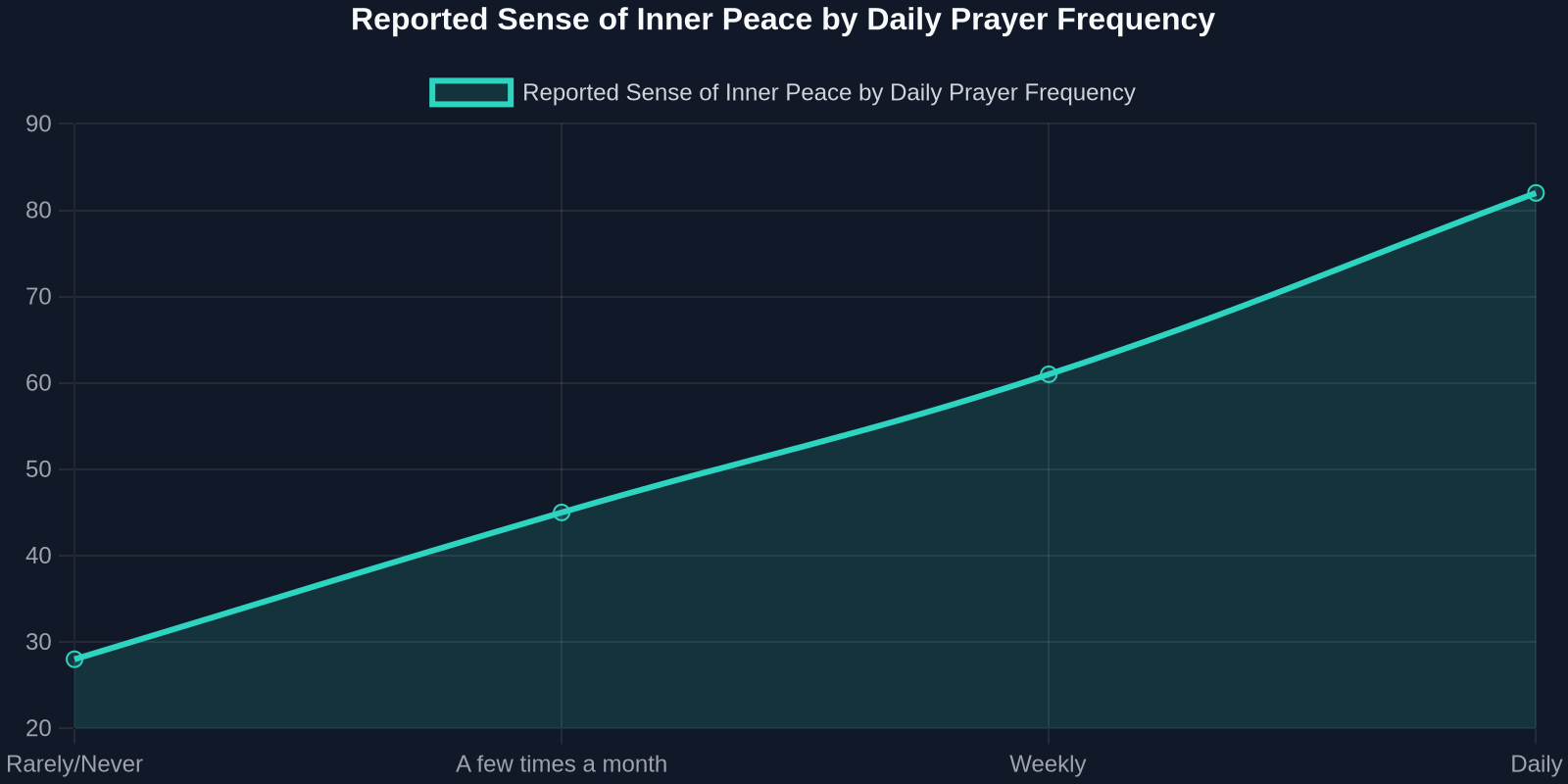
This doesn’t mean we become rigid or unable to adapt to new circumstances. It means our core identity isn’t threatened by change. Stewart navigated the transition from radio to film, from film to television, from young man to old age with a serenity that baffled more restless peers. That serenity was a byproduct of knowing his worth came from God, not box-office results. The fruit of the Spirit listed in Galatians 5:22-23, love, joy, peace, longsuffering, gentleness, goodness, faith, meekness, temperance, were not mere ideals. They were increasingly visible in the rhythm of his life.
What would it look like for a marketing director, a nurse, a teacher, or a parent to be described this way by their colleagues? Probably not through constant God-talk, but through a consistent disposition. The person who doesn’t forward gossip. The person who absorbs stress without passing it on. The person who stays calm when plans fall apart. That witness doesn’t require a camera crew. It just requires a quiet, daily connection to the Vine.
The Off-Screen Legacy: Family, Neighborhood, and Quiet Service
One of the most telling aspects of Stewart’s life was how he treated people who could do nothing for his career. He was known to write personal letters to grieving fans. He remembered the names of crew members’ children. He supported his local church’s food pantry without fanfare. These actions didn’t win him Oscars, but they built a reputation in heaven. James 1:27 defines pure religion in similar, practical terms: “Pure religion and undefiled before God and the Father is this, To visit the fatherless and widows in their affliction, and to keep himself unspotted from the world” (KJV).
For the reader feeling insignificant because their acts of service go unnoticed, Stewart’s life is a balm. The widest impact is often correlated with the deepest humility. A single, unseen act of kindness ripples outward in ways we may never know. You don’t need to be famous to be faithful. You need to be present, to the person in front of you, to the need you can meet, to the still, small voice directing your path.
“Even a child is known by his doings, whether his work be pure, and whether it be right.”, Proverbs 20:11 (KJV)
Bringing It Home: A Simple Rhythm for This Week
KJ Apa’s encounter with Jimmy Stewart’s faith story has prompted more than an interesting acting exercise; it’s a cultural moment that invites reflection. How do we sustain a quiet, consistent faith in loud, inconsistent times? The answer is wonderfully simple, even if it’s not always easy: small, regular habits that keep us connected to the Source.

This week, consider a single adjustment: before your feet hit the floor or your thumb opens an app, fix your first thought on Christ. Let your initial glance at your phone present a Scripture verse rather than a stressful headline. One practical tool is Vesper, which places a single King James Version Bible verse directly on your Lock Screen each day, making that first moment one of peace instead of pressure. From that small seed, a day can be shaped differently, with more patience, more perspective, more awareness of God’s presence.
The testimony of a quiet faith is never just for the person who holds it. It’s a gift to a family, a workplace, a neighborhood desperate for something real. Stewart’s legacy reminds us that the most memorable stories aren’t always the loudest. Often, they are simply the truest.