Standing on the Promises: The Timeless Hymn in a New Hymnbook
Published on October 8, 2026 · 15 min read

In a world where commitments are broken as easily as a morning text notification, the title of Russell Kelso Carter’s beloved hymn lands with quiet authority: “Standing on the Promises.” Not clinging. Not hoping. Standing. The word pictures a posture of settled trust, feet planted on something immovable, posture upright, gaze steady. The Church News recently confirmed that this hymn has been selected for a brand‑new hymnbook, a signal to believers everywhere that its message is not merely nostalgic but urgently needed in our day.
For the everyday Christian, the mom shuttling kids while reciting a whispered prayer, the accountant staring at a screen, the retiree sipping coffee on the porch, the promises of God can sometimes feel like faded wallpaper: always there yet barely noticed. The new hymnbook’s decision to include “Standing on the Promises” invites us to take those promises down, dust them off, and let them ring out again. In this post, we’ll explore why this hymn matters, what it means to stand on God’s promises today, and how a single verse of Scripture on your Lock Screen can make all the difference.
The Man Behind the Hymn: Russell Kelso Carter
Russell Kelso Carter (1849–1928) was not a cloistered poet but a man who walked through fire. An athlete, a professor, a pastor, and a physician, Carter knew what it meant to have his earthly supports knocked away. He was a star baseball player and an expert in chemistry, yet his greatest legacy would not be in science or sports but in a simple hymn chorused by millions.
In the midst of a serious illness, Carter experienced a profound spiritual crisis. Doctors gave him little hope. Yet, as he later testified, it was during this darkness that he learned to take God at His word. When he recovered, he penned the lines that millions now sing: “Standing on the promises of Christ my King, / Through eternal ages let His praises ring.” Those words were not theoretical. They were forged in the crucible of personal trial.
Carter’s life reminds us that the saints who wrote our hymns were ordinary people facing extraordinary pressures. They sang about promises not because life was easy, but because God was faithful in the storm. This context gives the new hymnbook’s inclusion a powerful resonance: it is an invitation to sing the same truth that carried a man through his deepest valley.
Why a New Hymnbook, and Why Now?
Hymnbooks might seem like relics in the streaming age, but their value endures. A printed hymnbook is a curated garden of theology set to music; it shapes worshippers over years, even decades, as they return to the same songs. The new collection, reported in the Church News, intentionally brings together songs from many eras and traditions, and “Standing on the Promises” stands as a bridge between generations.

For everyday believers, a new hymnbook is more than a publishing event. It is a quiet reminder that the Church is still singing, that the faith once delivered to the saints is being handed on, note by note, to our children. In an age of fleeting content, the hymnbook anchors us. When we open it on a Sunday morning, we are not merely reading lyrics; we are joining a centuries‑long chorus. As the Psalmist said, “I call to remembrance my song in the night: I commune with mine own heart: and my spirit made diligent search” (Psalm 77:6).
What Are the Promises of God?
Carter’s hymn does not specify which promises we stand on; instead it calls us to stand on “the promises” as a whole. This holistic view is deeply biblical. Scripture is filled with promises, from the first whisper in Eden to the final “Amen” of Revelation. The apostle Peter described them as “exceeding great and precious promises: that by these ye might be partakers of the divine nature” (2 Peter 1:4). They are not merely words of comfort; they are bridges that connect our frail humanity to the very character of God.
In the rush of a Tuesday afternoon, promises like “I will never leave thee, nor forsake thee” (Hebrews 13:5) or “Come unto me, all ye that labour and are heavy laden, and I will give you rest” (Matthew 11:28) can feel remote. Yet these are the exact promises that sustain us. They do not depend on our feelings; they rest on the faithfulness of the One who spoke them. Standing on the promises means aligning our daily decisions with that truth, choosing to drive in peace instead of anxiety, to speak with grace instead of sharpness, to rest instead of striving.
Promises for the Real World
Consider the mother managing a household on a tight budget. The promise “My God shall supply all your need according to his riches in glory by Christ Jesus” (Philippians 4:19) can feel abstract. But when she places it on her Lock Screen each morning, it becomes a daily anchor. The sight of that verse before she opens her banking app subtly reorients her heart. She is not denying the numbers; she is reframing them within the larger story of God’s provision.
Or take the young professional facing a hostile workplace. The promise “Fear thou not; for I am with thee: be not dismayed; for I am thy God: I will strengthen thee; yea, I will help thee” (Isaiah 41:10) is not a magic shield, but it is a solid rock. When the criticism comes, she can silently echo: I am standing on this promise.
The Spiritual Physiology of Singing Promises
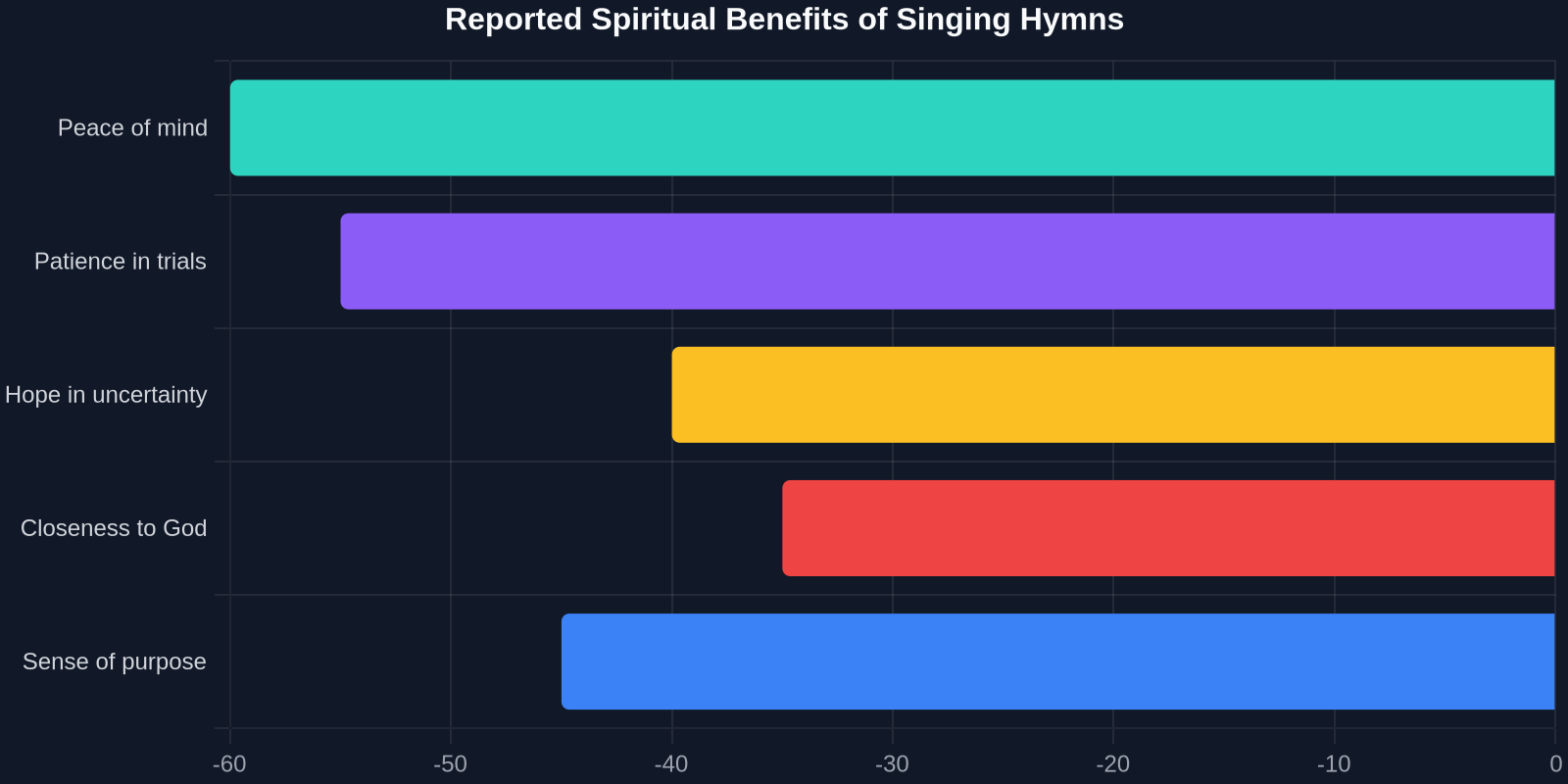
There is something uniquely powerful about singing truth rather than merely reading it. Neuroscience affirms what the Church has long practiced: music encodes memory and emotion in ways that prose alone cannot. When we sing, “Standing on the promises I cannot fall, / List’ning every moment to the Spirit’s call,” the melody carries the words deeper than our intellect. It wraps the promise around our heartstrings.

The hymn’s chorus, repeated again and again, acts like a spiritual circuit breaker. Every time we sing “Standing, standing, standing on the promises of God my Saviour,” we are reinforcing a neural pathway of trust. This is not hype; it is how God designed us. The apostle Paul exhorted the Colossians to let “the word of Christ dwell in you richly in all wisdom; teaching and admonishing one another in psalms and hymns and spiritual songs” (Colossians 3:16). Hymns are not a performance; they are a method of letting the Word settle into our bones.
Why the King James Version Matters in This Hymn
Russell Kelso Carter’s lyrics are soaked in the language of the King James Bible. Phrases like “bound to Him eternally” and “glory in the highest” echo its cadences. For many believers, the KJV is not merely a translation but the voice of their spiritual childhood. Its rhythms have shaped English‑speaking Christianity for four centuries, and its dignity lends weight to the promises.
When we put a KJV verse on our phone’s Lock Screen, we are doing more than displaying text. We are echoing the same language that nurtured Carter, that comforted soldiers in the trenches, that missionaries whispered in far‑off lands. The archaic thees and thous can sometimes feel distant, but they also lift our eyes above the slang of the day. They remind us that the promises are not a product of our culture but a gift from eternity.
Standing vs. Striving
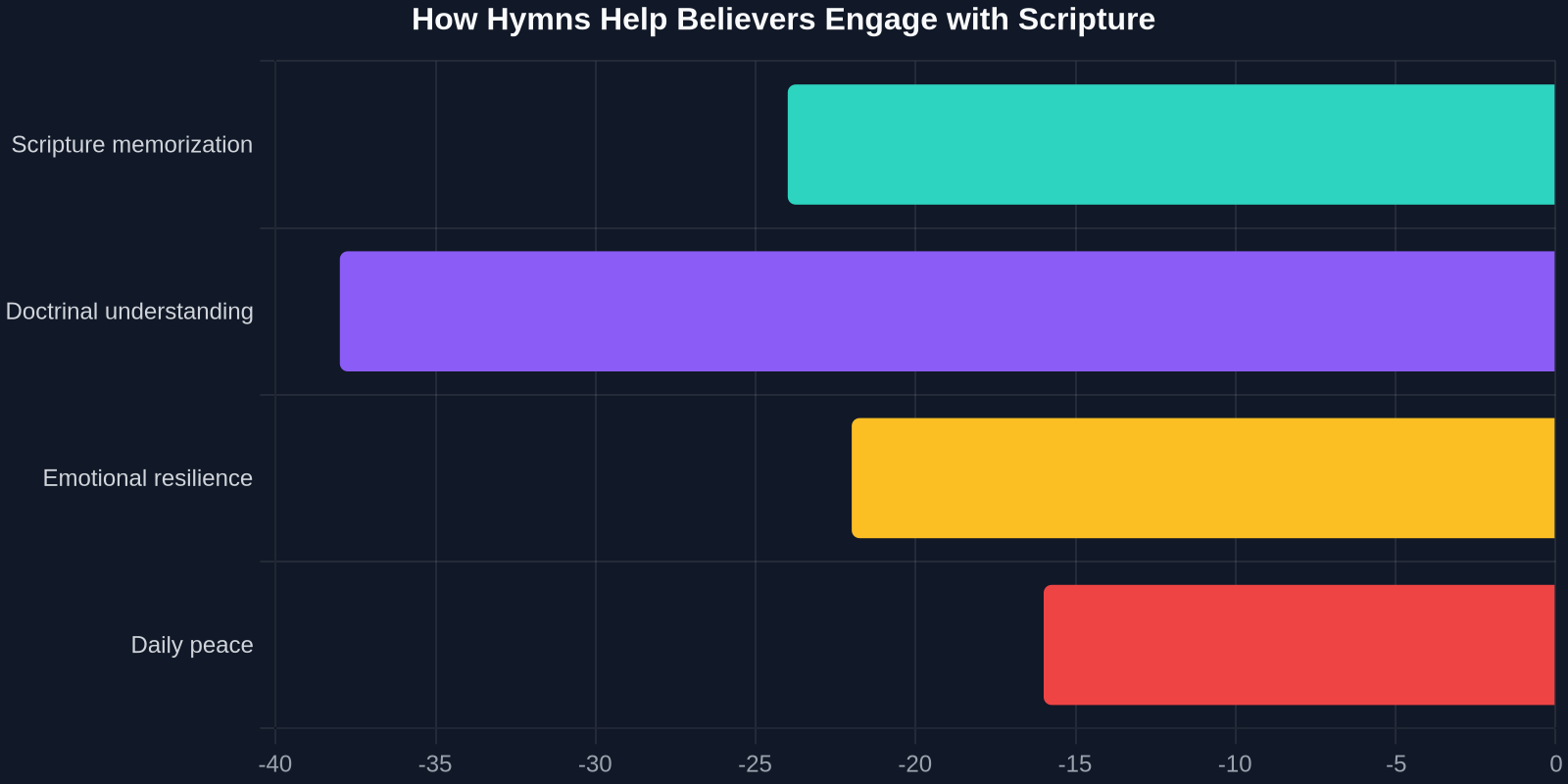
One reason “Standing on the Promises” endures is that it captures a posture of rest, not effort. In a culture that worships hustle, the hymn is counter‑cultural therapy. Standing is not passive; it is active trust. A soldier standing guard is not idle; he is alert, ready, stationed. So a Christian “standing” on the promises is not drifting; she is fixed, watching for the fulfillment of God’s word.

This distinction matters enormously for the tired believer. The promise “In returning and rest shall ye be saved; in quietness and in confidence shall be your strength” (Isaiah 30:15) directly challenges the assumption that we must accomplish our own peace. Standing on the promises means that the foundational work has already been done; we are simply holding our ground.
“Standing on the promises I cannot fall, / List’ning every moment to the Spirit’s call.”, Russell Kelso Carter
| Habit | Striving on My Own | Standing on the Promise |
|---|---|---|
| When fear arises | I frantically plan for every outcome | I whisper Isaiah 41:10 and breathe |
| When guilt whispers | I replay my failures and try harder | I remember 1 John 1:9 and confess |
| When provision seems lacking | I trust my bank balance and worry | I recall Philippians 4:19 and give thanks |
How One Verse a Day Can Change Everything
Here is where the rubber meets the road for the busy Christian. You want to stand on the promises, but you also have a 7:30 a.m. meeting and a to‑do list longer than your arm. The gap between Sunday’s hymn and Monday’s stress can seem unbridgeable. That is precisely why a daily rhythm matters more than a dramatic overhaul.
Consider the practice of placing a single KJV verse on your Lock Screen each morning. That tiny act, before you check email, before you scroll, alters the trajectory of the day. It is a quiet announcement: “Before I face the world, I will face God’s word.” Over weeks, the habit builds a treasury of promises in your heart. You find yourself humming a phrase while stuck in traffic, or recalling a promise in the middle of a tense conversation.
This is not a technique for super‑spiritual giants; it is a lifeline for ordinary people who simply want to tether their day to something solid. The apostle James wrote, “Be ye doers of the word, and not hearers only, deceiving your own selves” (James 1:22). A verse on the Lock Screen is a first step toward doing, it places the promise squarely in your path.
Singing the Promises in Community
While personal devotion is vital, the new hymnbook also reminds us that singing the promises is a corporate act. When a congregation stands together and belts out “Standing on the promises,” something spiritual happens. The woman who has been standing on God’s faithfulness through a cancer diagnosis hears the voice of the man next to her who is standing through a divorce. Their combined witness strengthens everyone in the room.
The early church understood this. In Acts, we see believers “continuing daily with one accord in the temple, and breaking bread from house to house, did eat their meat with gladness and singleness of heart, praising God” (Acts 2:46‑47). Singing together was not an optional extra; it was a vital expression of unity and shared hope. The new hymnbook, by including “Standing on the Promises,” gives congregations a fresh opportunity to lock arms and declare their trust together.
A Cross‑Generational Gift
One of the quiet gifts of a hymn like this is that it can be sung by a five‑year‑old and a ninety‑year‑old in the same breath. The lyrics are simple enough for a child to grasp, “He will not leave me”, yet deep enough for a theologian to mine. The new hymnbook’s design intentionally gathers songs that cross generational lines, creating a shared language of faith that resists the fragmentation of worship styles.
For grandparents, singing “Standing on the Promises” with grandchildren is a moment of holy transmission. They are not just passing down a melody; they are handing over a promise that they themselves have tested and found true. The Psalmist declared, “One generation shall praise thy works to another, and shall declare thy mighty acts” (Psalm 145:4). A hymnbook in the pew is one of the most effective tools for that generational bridge.
Practical Ways to Stand on the Promises This Week
So how do we move from appreciation to application? Here are five small, doable habits that help plant the promises in real life, no extra hours required.
1. Choose a “Promise of the Week”
Select one specific promise from Scripture for the week ahead. Write it on a sticky note, set it as your phone wallpaper, or tape it to the bathroom mirror. Let it become your mental background music. Suggestions: “The Lord is my shepherd; I shall not want” (Psalm 23:1) or “I am with you alway, even unto the end of the world” (Matthew 28:20).
2. Sing One Verse of a Hymn in the Morning
Before your feet hit the floor, hum or quietly sing a verse of “Standing on the Promises” or another hymn that carries a promise. The act of singing engages your whole self and sets your day on a foundation of worship rather than worry.
3. Pair a Promise with a Daily Task
Link a promise to a regular activity: when you pour your coffee, whisper, “God, You promised to supply my needs.” When you buckle your seatbelt, say, “I am safe in Your care.” These small anchors tether the spiritual to the ordinary.
4. Share a Promise with Someone Else
Text a friend a promise that encouraged you. Not a sermon, just a verse and a simple line: “This helped me today; hope it helps you.” You become a conduit of promise, and the act of sharing reinforces your own standing.
5. Place a Daily KJV Verse on Your Lock Screen
This is the simplest, most sustainable habit of all. A tool like Vesper puts one King James Version Bible verse on your Lock Screen and Home Screen each day, so the first thing you see is a promise instead of a notification.
When Standing Feels Impossible
There will be days when you cannot feel the promises. The grief is too loud, the doubt too strong. In those moments, the hymn’s invitation to stand is not a command to feel; it is a call to rest your full weight on Christ even when your emotions are in free‑fall. Russell Kelso Carter did not write those verses from a place of triumphing faith only; he wrote them from a sickbed, clinging to truths his body could not confirm.
The prophet Habakkuk models this raw faith: “Although the fig tree shall not blossom, neither shall fruit be in the vines; the labour of the olive shall fail, and the fields shall yield no meat; the flock shall be cut off from the fold, and there shall be no herd in the stalls: Yet I will rejoice in the LORD, I will joy in the God of my salvation” (Habakkuk 3:17‑18). Promises are made for exactly those seasons when everything visible says the opposite. Standing is the posture of waiting, not because we see the harvest, but because we trust the Farmer.
“Faithful is he that calleth you, who also will do it.”, 1 Thessalonians 5:24 (KJV)
The Quiet Revolution of a Lock‑Screen Verse
We live in an age of digital noise. Our phones clamor for attention with red badges and pinging alerts. What if the first thing we saw was not an urgent email but an eternal promise? That single shift, replacing the default Lock Screen with a verse, is a tiny rebellion against the kingdom of distraction. It declares that before the news cycle, before the calendar, before the demands of others, God’s Word has priority.
This is not about legalism. It is about intentionality. Most of us reach for our phones dozens of times a day. Each glance is an opportunity to be reminded of a promise. Over the course of a year, that adds up to thousands of exposures to Scripture. The quiet accumulation of these moments reshapes our inner monologue from anxiety to trust.
Vesper exists for this purpose: to weave a single KJV verse into the fabric of your day, one Home Screen at a time.
Conclusion: Keep Standing
The new hymnbook’s inclusion of “Standing on the Promises” is a gift to the Church. It invites us to reclaim a treasure that never rusts. For the tired parent, the struggling student, the lonely senior, this hymn says: you do not have to generate your own strength. The promises are beneath your feet, held up by the One who can never fail.
This week, consider a small, sustainable practice that places the promises in your path. Whether it is singing a verse, memorizing a single promise, or letting a KJV verse greet you on your Lock Screen each morning, you are not standing alone. The whole company of believers, past, present, and future, stands with you, anchored in the same faithful God.
Keep standing. The promises hold.