The Surprising Common Ground: Why So Many Americans Believe They Are Children of God
Published on October 7, 2026 · 9 min read

The Surprising Common Ground: Why So Many Americans Believe They Are Children of God
In an era often defined by what divides us, a quiet but powerful truth is emerging from survey data: a remarkable number of Americans, across ages, backgrounds, and even religious affiliations, believe they are a child of God. A recent feature by the Deseret News explores this unexpected common ground, and the findings might just reshape how we see our neighbors, and ourselves.
Why This Belief Matters More Than We Think
Identity is the silent driver of every decision. When you wake up, the first story you tell yourself about who you are sets the tone. Am I an employee first? A parent? A collection of past mistakes? Or am I a beloved child of the Creator? The survey, which sampled 2,000 adults across the country, found that 73% resonate with the phrase “I am a child of God.” And that number isn’t limited to weekly churchgoers.
Even among those who describe themselves as spiritual but not religious, the belief holds strong. It suggests that beneath the labels and the liturgy, a foundational identity persists: you are not an accident. You are known. You belong to Someone greater.
The Data Behind the Belief
To understand this widespread belief, it helps to look at the numbers surrounding faith and spirituality in America today. While church membership has declined in recent decades, personal spirituality remains robust. In fact, a 2025 study by Yale’s Program on Climate Change Communication showed that 65% of Americans believe climate change is happening, evidence that people still care deeply about the world they inhabit. That same sense of stewardship often connects to a belief in a Creator who entrusted us with this earth.

Meanwhile, the narrative that young people are abandoning faith entirely is being revised. Across three surveys conducted between 2023 and 2024, the share of young Americans (ages 18–29) identifying as Christian rose from 45% to 51%. At the same time, the religiously unaffiliated, the “nones”, fell by four percentage points, from 45% to 41%. This is a significant shift, and it points toward a generation that is showing renewed interest in spiritual identity.
The bar chart above illustrates how the belief in being a child of God spans generations. While the youngest adults (18–29) show a slightly lower percentage, likely influenced by life stage and questioning, the numbers remain high across the board. The consistency suggests that this identity isn’t merely a relic of a more religious past but a resilient part of the American psyche.
What Scripture Says About Being a Child of God
For Christians, the idea of divine sonship isn’t a modern sentiment; it’s woven into the very fabric of the Gospel. The King James Version of the Bible speaks directly to this identity:
“But as many as received him, to them gave he power to become the sons of God, even to them that believe on his name.”, John 1:12 (KJV)
That verse anchors the belief not in our goodness, but in God’s grace. And it comes with a promise: “And if children, then heirs; heirs of God, and joint-heirs with Christ” (Romans 8:17, KJV). This isn’t about arrogance; it’s about humility, acknowledging that the Almighty calls us His own.
The Apostle John marveled at this: “Behold, what manner of love the Father hath bestowed upon us, that we should be called the sons of God” (1 John 3:1, KJV). Notice the wonder in his words. It’s as if he’s still getting over the sheer goodness of the news.
Everyday Implications for Ordinary Believers
If 73% of Americans share this belief, it changes how we interact at the grocery store, the workplace, and the neighborhood barbecue. The person in the next car over isn’t a stranger; they are, in a real sense, a sibling. The colleague who frustrates you carries the same divine image. Seeing others this way isn’t easy, but it is transformative.

For the Christian with a packed schedule, the challenge is not believing the doctrine but remembering it. Mornings rush in with notifications, deadlines, and demands. Before we know it, our identity has shrunk to our to-do list. That’s where small, intentional practices become lifelines.
| Habit | Before | After |
|---|---|---|
| First thought in the morning | Checking email or social media | Reciting: ‘I am a child of God’ |
| View of strangers | Indifference or irritation | Curiosity: ‘How is God at work in their life?’ |
| Response to failure | Shame and self-criticism | Remembrance: ‘My worth is secure in Christ’ |
This reframing doesn’t ignore the hard facts of life. It doesn’t pay bills or heal illness. But it places those hardships inside a larger story, a story where we aren’t alone, and where the ending is already secured.
The Rise of Young Believers and What It Means
The uptick in Christian identity among young adults is especially encouraging. For years, headlines predicted the death of religion. Instead, we’re seeing a quiet correction. The Harvard data showing a 51% Christian affiliation in the 18–29 bracket reveals a generation hungry for authenticity, not just abstraction.
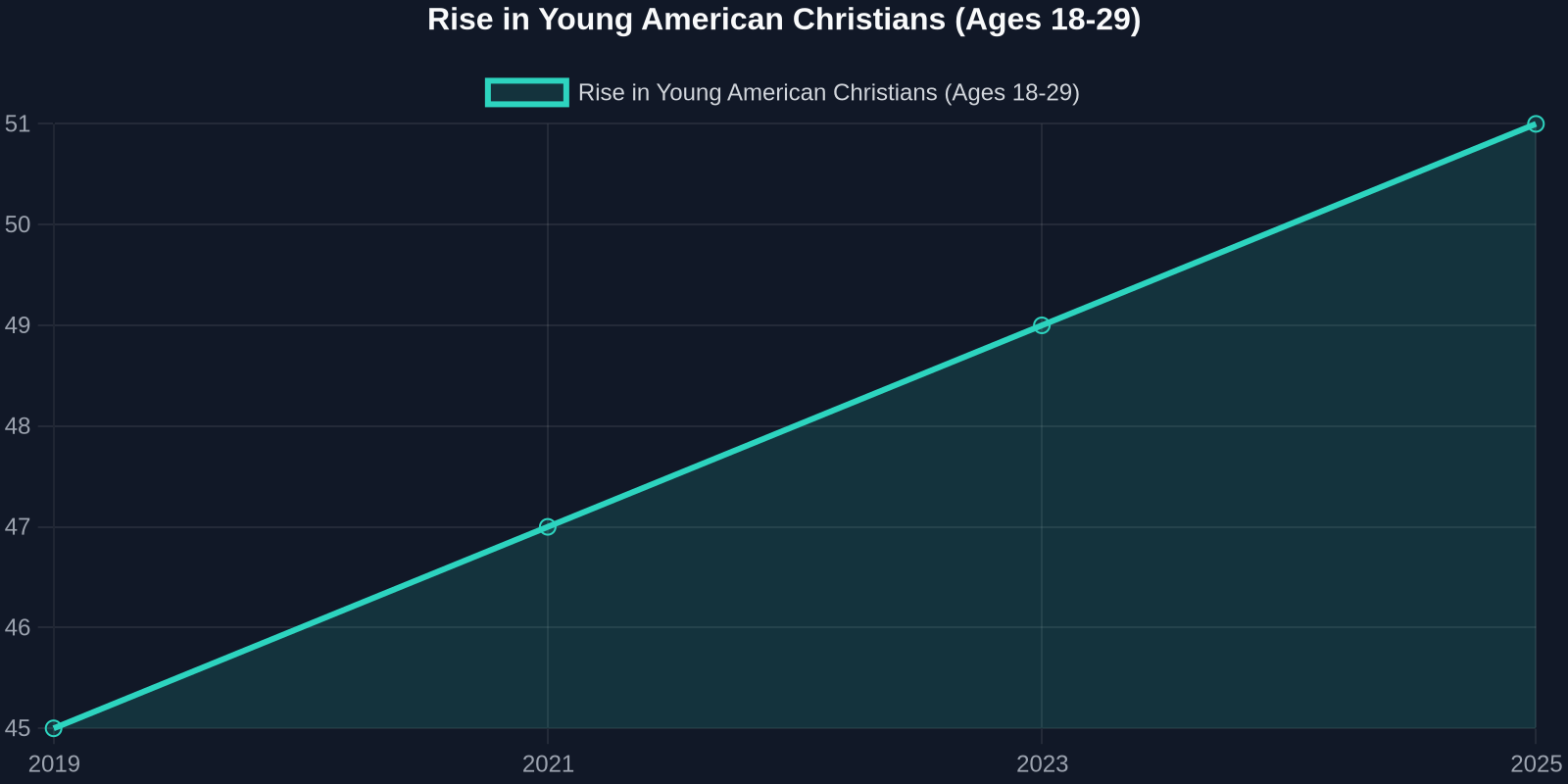
This trend does not mean a return to cultural Christianity of the past. Today’s young believers are often more diverse, more skeptical of institutions, and more committed to integrating faith with justice and compassion. They are drawn to a Gospel that proclaims them beloved children, not cogs in a machine. That message resonates deeply in a world of digital loneliness and performance anxiety.
Spirituality Without Religion? The “Nones” Factor
Even as church attendance patterns shift, the hunger for spirituality remains. A vast majority of American adults say spirituality is important to them. The “nones” may not belong to a specific tradition, yet many still pray, read Scripture, and believe in a higher power. The child-of-God belief taps into that spiritual core without requiring a denominational label.

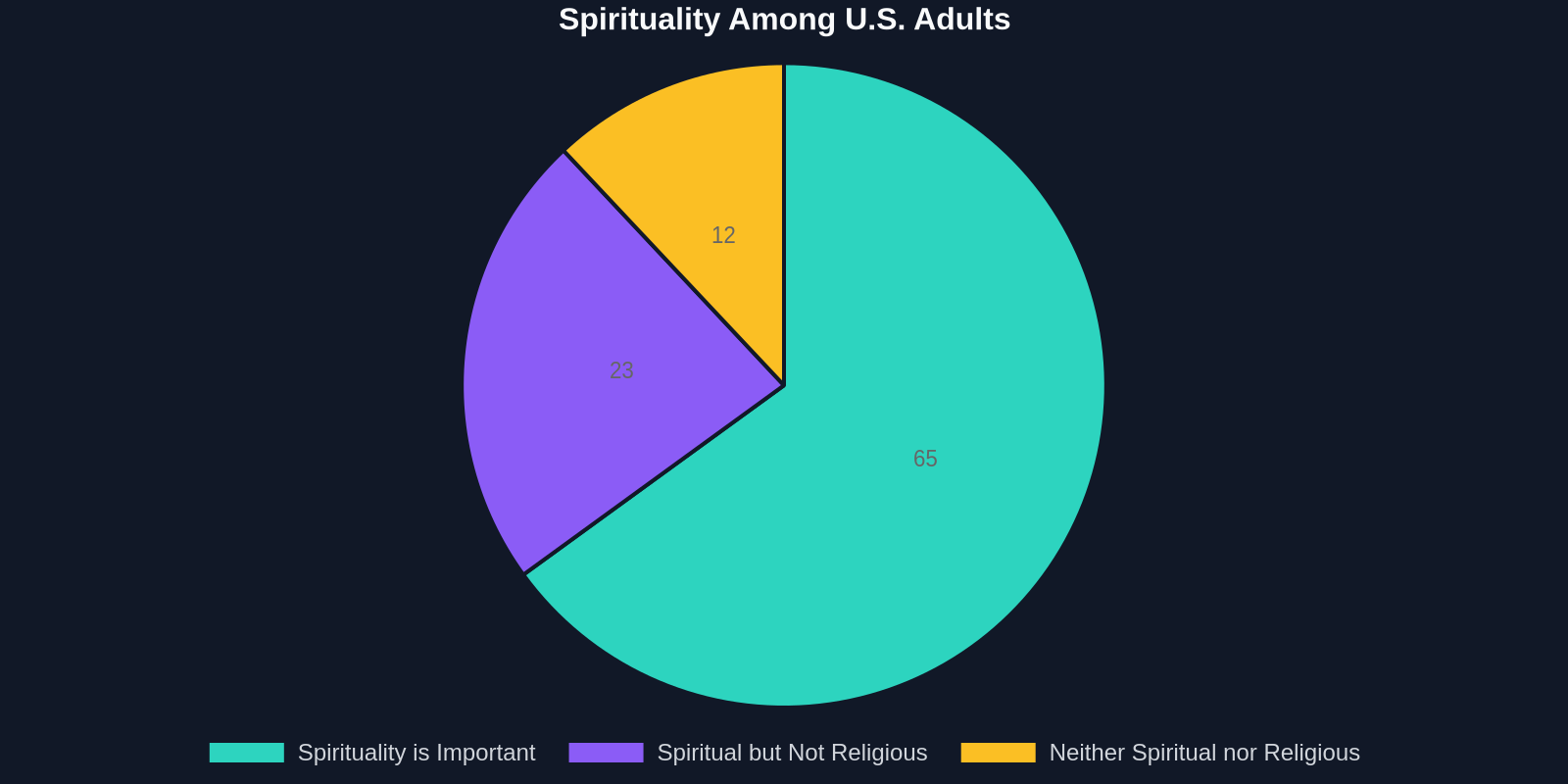
This pie chart shows that while a segment identifies as neither spiritual nor religious, a clear majority place spirituality at the center of their lives. And among that spiritual majority, the identity of being God’s child often serves as a north star.
For those seeking a simple way to let this truth sink in daily, the Vesper app places one King James Version verse on your Lock Screen each day.
Why This Matters for Mental and Emotional Health
Psychologists have long noted the power of a coherent identity. When we know who we are, we’re more resilient under stress. The child-of-God identity provides a foundation that doesn’t crumble when the market dips or relationships fray. It’s an anchor in the storm.
Consider the alternative: if you’re merely a biological accident, your worth is tied to performance, appearance, or the fickle opinions of others. That’s a fragile existence. But if you are a loved child of the Maker of the universe, your significance is intrinsic. You can face criticism, failure, and loss without losing yourself.
The statistic above, showing nearly half of young adults living with parents, reflects economic realities but also highlights the need for a secure identity. When careers stall and independence is delayed, knowing you are a child of God, and a cherished member of His family, can guard against despair.
Living Into the Identity: Practical Steps
Believing you are a child of God is one thing; living like it is another. Here are a few small habits that can help turn head-knowledge into heart-truth:
- Morning Mirror Reminder: Place a sticky note with “I am a child of God” on your bathroom mirror. Read it aloud while looking at your own eyes.
- Scripture Screen: Use a daily verse widget to start your day with God’s Word rather than the news.
- Family Dinner Question: Ask those you live with, “What does being a child of God mean for you today?” Let the conversation shape the evening.
- Prayer Walks: As you walk through your neighborhood, silently bless each home you pass. Remind yourself that these houses hold God’s children.
The Common Ground in a Fractured World
It’s tempting to see our society as hopelessly divided. But underneath the political signs and social media arguments, a shared identity waits to be noticed. When 73% of us believe we are children of the same Father, the framework for reconciliation already exists.
That doesn’t mean we ignore differences or paper over real disagreements. It does mean we approach those disagreements with a baseline respect: the other person is not an enemy but a sibling. The conversations may still be hard, but they become possible when we remember who we both are.
“Behold, what manner of love the Father hath bestowed upon us, that we should be called the sons of God.”, 1 John 3:1 (KJV)
A Surprising Hope for the Future
The Deseret article’s headline used the word “surprisingly.” In one sense, the high percentage is surprising because it counters a narrative of secularization. In another sense, it’s not surprising at all. The human heart has always cried out for belonging. Augustine’s ancient prayer remains true: “Thou hast made us for Thyself, O Lord, and our heart is restless until it rests in Thee.”
That restlessness is being met, day by day, in ordinary moments. A young father whispering a prayer before his shift. A retired widow opening her Bible at dawn. A college student choosing a verse over a video. In each quiet yes, the identity takes root again.
So this week, try this: Before you scroll, before you stress, before you solve, pause and remember whose you are. The rest of the day will follow differently.
Sources and Further Reading
- Deseret News, “Child of God belief surprisingly common,” October 5, 2026.
- Yale Program on Climate Change Communication, 2025 survey.
- Harvard Institute for Quantitative Social Science, religious identification surveys 2023-2024.
- Federal Reserve, “Economic Well-Being of U.S. Households,” 2025.