When Sunday Morning Becomes Game Time: Navigating Youth Sports and Church Attendance
Published on October 12, 2026 · 10 min read

For generations, Sunday morning carried a quiet rhythm. Families would dress, gather, and make their way to a familiar pew. The sanctuary smell of old hymnals and wood polish marked the start of the week with prayer and community. But for a growing number of Christian households, that rhythm has been replaced by something else, the sharp blast of a referee’s whistle, the glare of a travel team schedule, and a hasty breakfast eaten in the minivan.
A recent Axios report captures what many pastors and parents have felt for years: youth sports are now regularly scheduled on Sunday mornings, pulling families away from church attendance. What was once a rare conflict has become a structural shift in how communities use Sunday mornings. This isn't about a few isolated tournaments. Entire leagues, clubs, and elite development organizations treat Sunday as just another day for competition, and families face a quiet, persistent pressure to choose the field over the sanctuary.
As believers, we don't need to respond with alarm or anger. But we do need to pay attention. When the habits of the culture reshape the habits of the faithful, it’s worth asking with an open heart: what is being gained, and what might be getting lost? This post explores what the trend means for ordinary Christians trying to honor God in their daily walk, and how we might respond with wisdom rather than guilt.
The New Sunday Morning Conflict
Not long ago, Sunday morning sports were the exception, reserved for championship finals or rescheduled rain dates. Coaches and league organizers, many of whom were churchgoers themselves, assumed families would be in church. Today, that assumption has faded. Travel soccer tournaments, AAU basketball showcases, and elite gymnastics meets routinely begin at 8:00 a.m. on Sunday. Even recreational leagues, once held on weekday evenings or Saturday afternoons, have pushed into Sabbath hours.
The Axios article points to a culture where youth sports have become professionalized earlier than ever. Parents invest significant money and time, hoping to secure college scholarships or simply to keep their children active and engaged. Coaches emphasize commitment. And in the calculus of a busy family, the one hour needed for worship can start to feel negotiable, especially when missing a game might cost a starting position or a spot on the roster.
Many parents express genuine pain over the dilemma. They want their children to learn discipline, teamwork, and perseverance. They also want to honor the Lord’s Day. The schedule doesn’t ask for their consent, it simply arrives, week after week, in an online portal. Christian families from all traditions, Catholic, Protestant, Orthodox, describe the same struggle.
What the Numbers Reveal
Research underscores how widespread this shift has become. While the Axios piece provides a snapshot, longer-term studies paint the broader picture.

That figure, from a Barna Group study, represents nearly half of all church-attending families with kids in sports. It is not a marginal fringe. The study also found that among families with a child playing a travel sport, the rate of conflict rises to over 60%. Many report missing church at least once a month during the season.
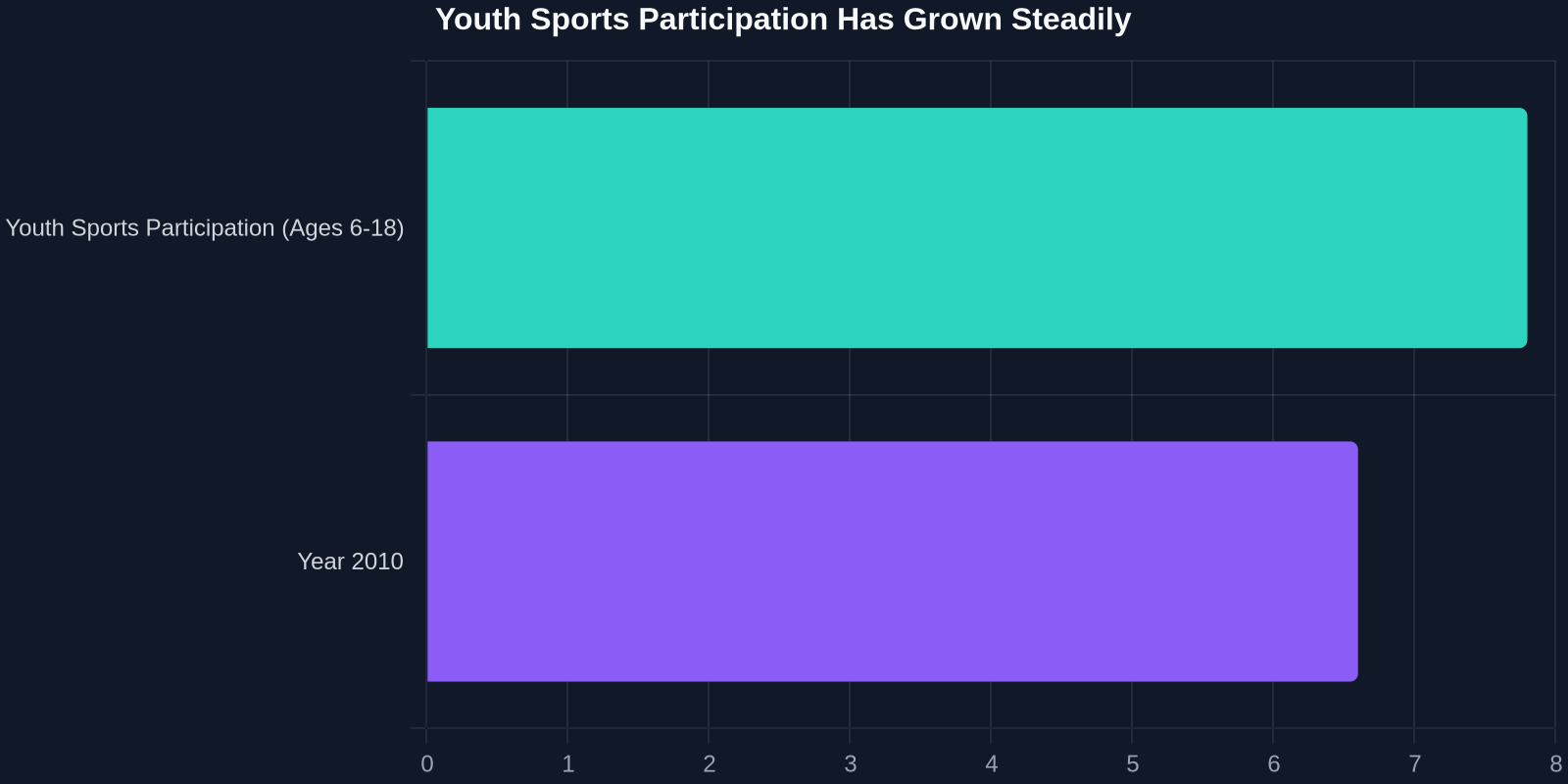
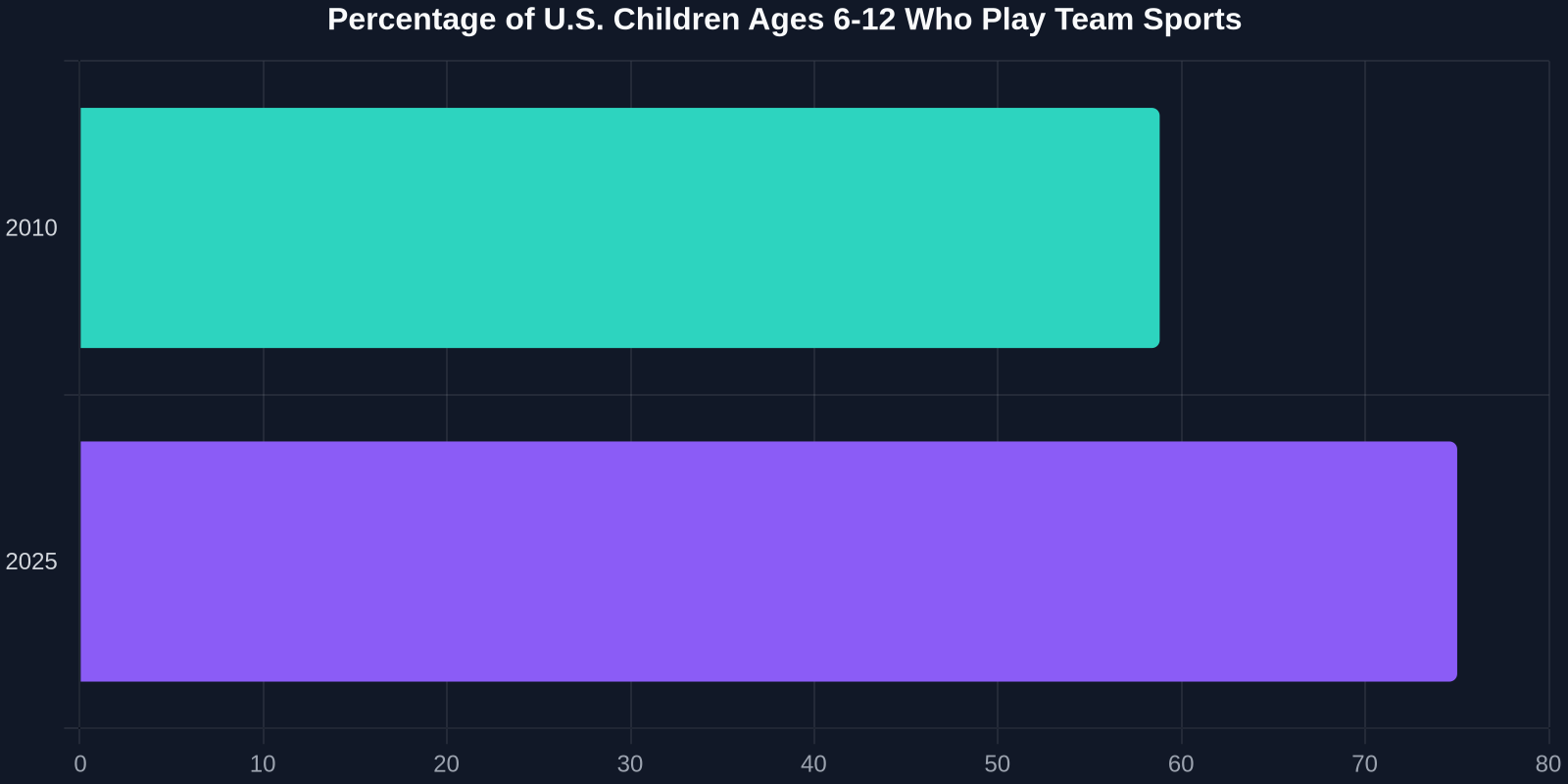
At the same time, youth sports participation has grown steadily. According to the Aspen Institute, the percentage of children ages 6 to 12 playing team sports on a regular basis increased from 58.8% in 2011 to roughly three-quarters of all kids in that age bracket by the early 2020s. Travel and club-level competition, the kind most likely to schedule Sunday morning events, expanded even faster.
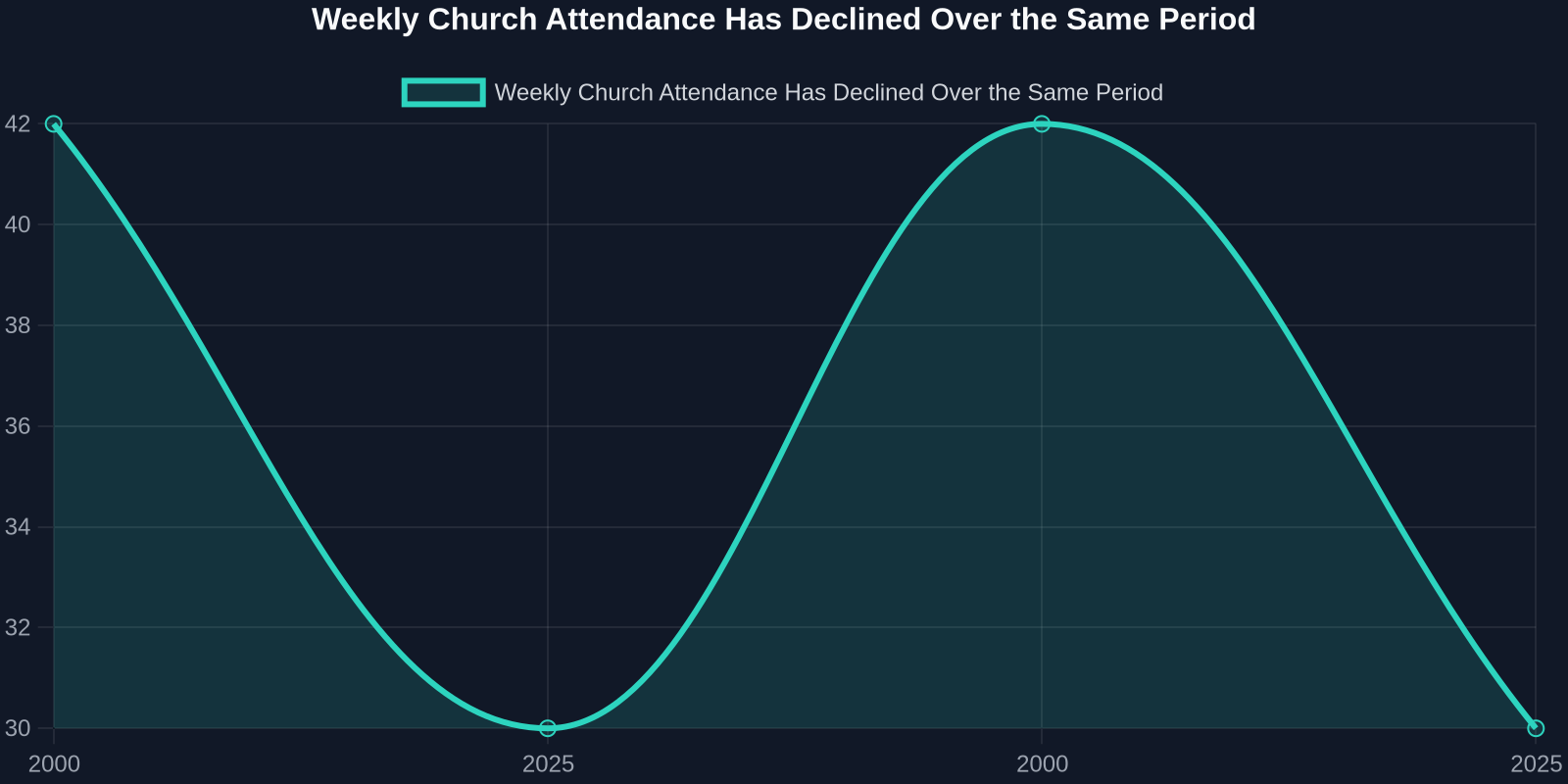
Meanwhile, weekly church attendance in the United States has followed a different trajectory. Gallup data shows attendance dropping from 42% in 2000 to about 30% today. While many factors contribute, secularization, digital life, shifting priorities, the rise of organized Sunday activities is not merely a coincidence. When the most formative hours of a child’s weekend are spent in a competitive arena rather than a worshiping community, the long-term spiritual impact is real.
Why This Is Happening
No single villain explains the shift. A confluence of social, economic, and cultural currents has reshaped Sunday:
- The professionalization of youth sports: By age 10, children in many communities are funneled into “elite” tracks, with year-round commitments and national travel. These programs often rent field space on Sunday mornings because it is cheaper and readily available.
- Parental anxiety about the future: In a competitive economy, parents fear their child will fall behind without every advantage. Sports are seen not just as recreation but as résumé building.
- The decline of blue laws: Legal restrictions on Sunday commerce and recreation have mostly disappeared, erasing a cultural guardrail that once protected worship time for everyone, believers and non-believers alike.
- A loss of catechesis on the Sabbath: Many Christians today have not been taught a rich theology of rest and the Lord’s Day. When Sunday feels like any other day, sports feel no different from any other activity.
“Remember the sabbath day, to keep it holy.”, Exodus 20:8 (KJV)
The Spiritual Cost for Families
Missing church occasionally because of a special tournament might seem harmless. But decades of pastoral experience and social science research tell a different story. The regular absence of families from corporate worship weakens the whole body of Christ. Children lose the formative experience of seeing their parents sing, pray, kneel, and listen to Scripture alongside other believers. Parents, in turn, miss the weekly recalibration that helps them resist the world’s relentless anxiety.

One pastor described it to me as “slow erosion.” No single Sunday feels decisive. But over the course of a childhood, a family can drift from the center of church life to its periphery, retaining a sense of faith identity without the nourishment of consistent practice. Young people who grow up in this pattern are less likely to remain connected to a church in young adulthood.
There is also a relational cost. Church is one of the few remaining spaces where multiple generations gather together, where a child can be known by older saints who are not their coaches or teachers. In a sports environment, children are sorted by age and ability; at church, they sit, sing, and sometimes serve alongside toddlers, grandparents, and everyone in between. That intergenerational fabric frays when families are absent.
A Biblical Perspective on Rest and Community
The fourth commandment is not an arbitrary rule. It is a gift. “Six days shalt thou labour, and do all thy work: But the seventh day is the sabbath of the Lord thy God: in it thou shalt not do any work” (Exodus 20:9–10, KJV). The Sabbath rest is meant to remind us that we are not defined by our productivity. In a youth sports culture that often measures a child’s worth by performance stats, the call to stop, worship, and trust God can be radically countercultural.
Jesus also modeled a rhythm of withdrawal and communal prayer. He attended synagogue “as his custom was” (Luke 4:16, KJV). The early church gathered on the first day of the week to break bread and hear the apostles’ teaching (Acts 20:7). The pattern is not about legalism; it is about sustained spiritual health. The writer of Hebrews urges believers not to forsake “the assembling of ourselves together, as the manner of some is” (Hebrews 10:25, KJV). That verse speaks directly to a culture that offers endless reasons to stay away.
Finding a Third Way: Practical Habits for Busy Families
The answer for most families is not to abandon sports entirely, that would be neither realistic nor necessarily good. But it does require intentional recalibration. Here are a few practical habits parents have found helpful:

- Choose one worship service to guard. Even if a game falls on Sunday afternoon, attending an early morning or Saturday evening service can anchor the week. Many churches offer multiple worship times. The key is consistency and communal worship, not the exact hour.
- Negotiate with leagues early. Some coaches and associations are receptive when families explain, at registration, that they prioritize Sunday morning worship. A quiet, respectful conversation can sometimes shift a team’s schedule or at least reduce pressure.
- Build a “church on the road” habit. On weekends when travel prevents attending a home church, use a prayer book or a daily Scripture widget, like the one Vesper offers, which places a KJV verse on your phone’s Lock Screen each day, to begin the morning with God’s Word. Then find a local congregation near the tournament site to attend, even if it feels unfamiliar.
- Create a post-game Sabbath ritual. If the game is unavoidable, protect the rest of Sunday for quiet, family time, and evening prayer. Avoid using the whole day for competitive activity and commerce.
- Connect athletics to faith at home. Use the lessons of sports, perseverance, humility in victory and defeat, bodily discipline, as conversation starters about spiritual life. Read together Paul’s athletic imagery in 1 Corinthians 9:24–27 (KJV).
A Gentle Call to Prioritize
The point of all this is not to heap guilt on parents who feel stretched thin. Jesus never laid heavy burdens on people without offering help (Matthew 11:28–30). The invitation is to ask: where is our treasure? Where is our child’s heart being formed week after week? The crowds at the soccer complex will not be the ones who visit us in the hospital, who pray over our children when they wander, who teach them the old hymns and the creeds. The body of Christ, gathered in worship, is a gift we should hesitate to treat as optional.
“For where your treasure is, there will your heart be also.”, Matthew 6:21 (KJV)
A Word for Church Leaders
Congregations can also respond pastorally. Rather than only lamenting empty pews, leaders can:
- Offer midweek family worship or Saturday evening services that accommodate sports schedules without replacing Sunday.
- Teach clearly and winsomely about the meaning of Sabbath rest, not as a burden but as liberation.
- Organize church-sponsored sports leagues where games are never scheduled on Sunday mornings, modeling a different way.
- Check in on families that have been missing without judgment, simply asking how the church can support them.
Conclusion: A Lamp Unto Our Feet
The Sunday morning sports conflict is not the first cultural pressure to reshape Christian practice, and it will not be the last. But in every age, the faithful are called to “stand fast, and hold the traditions which ye have been taught” (2 Thessalonians 2:15, KJV). That doesn’t mean refusing to adapt; it means refusing to let the world set the rhythm of our lives.
Parents who are wrestling with this issue can start small. This week, look at next month’s schedule and circle one Sunday that you will protect for worship, no matter what. Talk with your child about why it matters. Let the quietness of the sanctuary speak louder than the noise of the sideline. And if you need a simple way to keep Scripture close all week long, a daily KJV verse on your Lock Screen can be a gentle reminder of what lasts forever: “Thy word is a lamp unto my feet, and a light unto my path” (Psalm 119:105, KJV).