Why Evangelicals Are Finding Home in an Ancient Prayer Book
Published on November 4, 2026 · 12 min read

It is a quiet, almost unexpected resurgence. In home offices and around kitchen tables, in small groups and through smartphone apps, a growing number of evangelical Christians are reaching for a book that is older than the nation itself. The Book of Common Prayer, a foundational text of Anglican worship first crafted in the crucible of the English Reformation, is having a moment far beyond its traditional borders. Christians raised on spontaneous prayer and modern worship choruses are discovering, in its time-worn cadences, a rootedness and depth they didn’t know they were missing.
This isn't a story of denominational migration. It’s a story of spiritual hunger. The movement, highlighted recently by Christianity Today, reveals that believers across traditions are turning to liturgy not as a replacement for heartfelt, personal prayer, but as a trellis upon which it can grow. For the everyday Christian navigating a noisy, anxious world, the appeal is surprisingly practical: here is a tool that places Scripture directly into the rhythm of the day, every day, without waiting for inspiration to strike.
The Search for Spiritual Stability in a Shifting Age
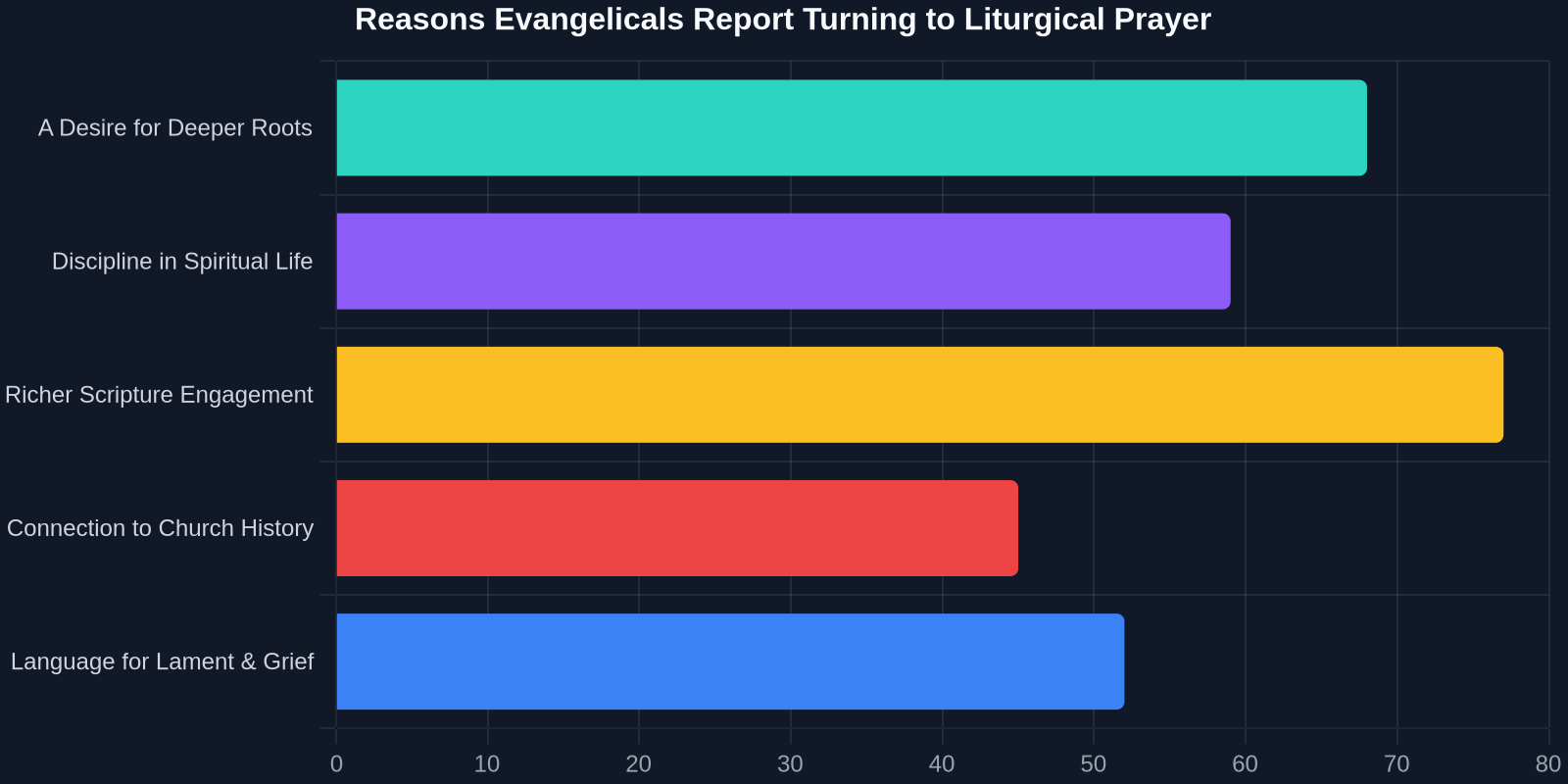
Why now? The modern evangelical landscape is often defined by its dynamism, new churches, new music, new methods for reaching a changing culture. That energy has been a great strength. Yet many believers are finding that a life built only on the new can feel precarious. The Christian life was never meant to be lived in isolation from the saints who came before. As the writer Haley Byrd Wilt observed, Christians are turning to liturgy for its “rootedness and depth,” a desire that speaks directly to a generation caught between digital acceleration and a longing for something solid.
This search for stability finds a natural answer in a prayer book designed for the ordinary and the extraordinary alike. From the marriage rite to the burial office, from morning prayer to the service of Holy Communion, the book provided a shared language of faith for an entire nation. Today, its appeal is less about national identity and more about personal formation. A harried parent may not have eloquent words to offer God at 6 a.m., but they can faithfully pray, “O Lord, open thou my lips; and my mouth shall shew forth thy praise” (Psalm 51:15, KJV). That simple, scriptural beginning can anchor a day that would otherwise drift.
Beyond Spontaneity: The Grammar of Prayer
One of the most significant cultural traits of modern evangelicalism is a high value on spontaneity. The sincere, “from the heart” prayer is seen as the most authentic. The Book of Common Prayer offers a gentle, challenging reminder that sincerity and structure are not enemies. In fact, the structure often saves our sincerity from the shallowness of our own immediate feelings. When we are weary, grieving, or spiritually dry, a pre-written prayer can carry us toward God when our own words fail.

This is not a new idea. The very psalter, the Bible’s own hymnbook, gives us language for every season of the soul, rage, despair, joy, and quiet trust. The prayer book takes that biblical pattern and applies it to daily life. A believer doesn’t have to manufacture a feeling. They simply join a prayer that has been on the lips of millions of Christians for nearly five centuries. This is liberating, not binding. It is a form of training in the language of heaven, a way of learning to ask for the right things in the right way.
“Be not rash with thy mouth, and let not thine heart be hasty to utter any thing before God: for God is in heaven, and thou upon earth: therefore let thy words be few.”, Ecclesiastes 5:2, KJV
The Daily Office: A Bible-Reading Plan Disguised as a Prayer Book
For a community that has historically championed the centrality of Scripture, perhaps the most compelling feature of the Book of Common Prayer is its saturation in the Bible. The structure of Morning and Evening Prayer, the two main daily offices, is built almost entirely from Scripture. The services include a cycle of Psalms, Old and New Testament readings, and canticles, songs taken directly from the pages of Holy Writ, such as the Song of Zechariah (Benedictus) or Mary’s Magnificat.
Thomas Cranmer, the book’s primary architect, had a singular goal: to immerse the English people so thoroughly in the Bible that they would read through the entire Psalter each month and most of the Bible each year. This is a far cry from a superficial “verse of the day.” It’s a comprehensive, unhurried walk through the grand story of redemption. Here’s what a typical session of Morning Prayer might look like in practice for a believer today:
| Element | Spontaneous Quiet Time | Prayer Book Morning Prayer |
|---|---|---|
| Opening | Free-form praise or silence | Scriptural sentences and a call to confession |
| Confession of Sin | Often overlooked if not feeling convicted | A regular, thorough general confession, ensuring a clean heart before God |
| Scripture Engagement | A single chapter, perhaps with a devotional thought | Psalms, an Old Testament reading, and a New Testament reading |
| Core Prayer | Petition-driven, focused on immediate needs | The Lord’s Prayer and fixed collects that teach us to pray for the whole world and all conditions of men |
| Closing | Amen | A final prayer of thanksgiving and a blessing of grace from 2 Corinthians 13:14 |
This comparison isn’t meant to demean personal, free-form devotion. For many, a season of simply pouring out their heart to God is exactly what the morning requires. But the prayer book provides a comprehensive “workout” for the soul, ensuring that every part of our faith is exercised: adoration, confession, thanksgiving, and supplication, all anchored in God’s own Word. In 2025-2026, as the global church marks the 1700th anniversary of the Nicene Creed, using a prayer book that famously includes this ancient statement of faith connects a solitary morning devotion to a vast, historical communion of saints.
The Liturgy as an Antidote to Modern Loneliness
The conversation around the Book of Common Prayer is happening in a culture grappling with profound isolation. While not explicitly political or trendy, the act of praying a communal liturgy, even alone, is a profound refusal of modern individualism. When I pray the words, “We have left undone those things which we ought to have done,” I am not engaged in navel-gazing. I am joining the universal confession of the Church, acknowledging that my particular failings are part of a shared human condition, and that God’s mercy is equally needed by all.

The practice of fixed-hour prayer means that at roughly the same moment, a layperson in Chicago, a grandmother in Sydney, and a student in Nairobi may all be reading the same Psalm and praying the same collect. This is a profound, invisible fellowship. It creates a sense of solidarity that transcends algorithmic echo chambers and partisan divides. The prayer book doesn’t ask, “How do you feel about this?” It asks, “Will you join the prayer the Church is already praying?”
Overcoming the “Rote Repetition” Hurdle
For many raised in traditions that avoid pre-written prayer, the fear is that liturgy will become what Jesus warned against: “vain repetitions” (Matthew 6:7, KJV). The distinction is vital. Vain repetition is mindless, magic-word religion that thinks it will be heard for its “much speaking.” Faithful liturgical prayer is the opposite. It’s a mindful, scriptural meditation. The fixed words become a track on which the heart can run, freeing the mind from the burden of constant invention to actually attend to the content of what is being said. The paradox is that a form can create the deepest freedom for true, heartfelt engagement with God.
This integrates seamlessly with the slow, meditative reading of Scripture known as lectio divina. The corporate reading of the daily Psalms and lessons in the prayer book slows us down. We are not scanning for an inspiring verse to get us through the day. We are sitting under the authority of God’s Word, letting it read us, shape us, and challenge us. As the prayer of humble access beautifully phrases it, we come “not weighing our merits, but pardoning our offences.” This stance of receptive humility is precisely what a disciplined liturgical life cultivates.
A Living Tradition for Non-Liturgical Churches
One of the more surprising findings is that the Book of Common Prayer is not merely ushering evangelicals into Anglican churches. Instead, it is being quietly adapted within their own contexts. Small groups in Baptist churches are reading evening prayer together. Nondenominational pastors are using the collects to open their sermons. A house church might pray the Great Litany in a time of national crisis, finding in its sweeping petitions a vocabulary for lament and intercession that their own tradition lacked.

This grassroots adoption points to a deeper reality: the prayer book is not ultimately an Anglo-Catholic relic. It is a masterclass in Christian prayer belonging to the whole Church. Its core DNA, the Psalms and the Lord’s Prayer, is the common inheritance of all who name the name of Christ. The reflections from a daily devotional rooted in this tradition are a deep well, drawing thousands of readers each day not because the voice is trendy, but because it is tended with theological care and pastoral gravity. This is not about labels; it’s about a shared language that can begin to bridge the gaps between our fractured communities by focusing us on the majestic, unifying truths of the gospel.
The 2025-2026 Moment: The Nicene Creed Anniversary
The current liturgical year carries a particular resonance, marking the 1700th anniversary of the Council of Nicaea and the Nicene Creed. This is the very creed recited in the prayer book’s Holy Communion service. In a time when doctrinal clarity is both deeply needed and hotly contested, the simple act of confessing the Nicene faith grafts the individual believer into a testimony that predates modern church splits by millennia. To pray the creed is not to perform a ritual; it is to make a stand. “I believe in one Lord Jesus Christ… God of God, Light of Light, Very God of very God.” These words have a weight that our own summaries cannot match.
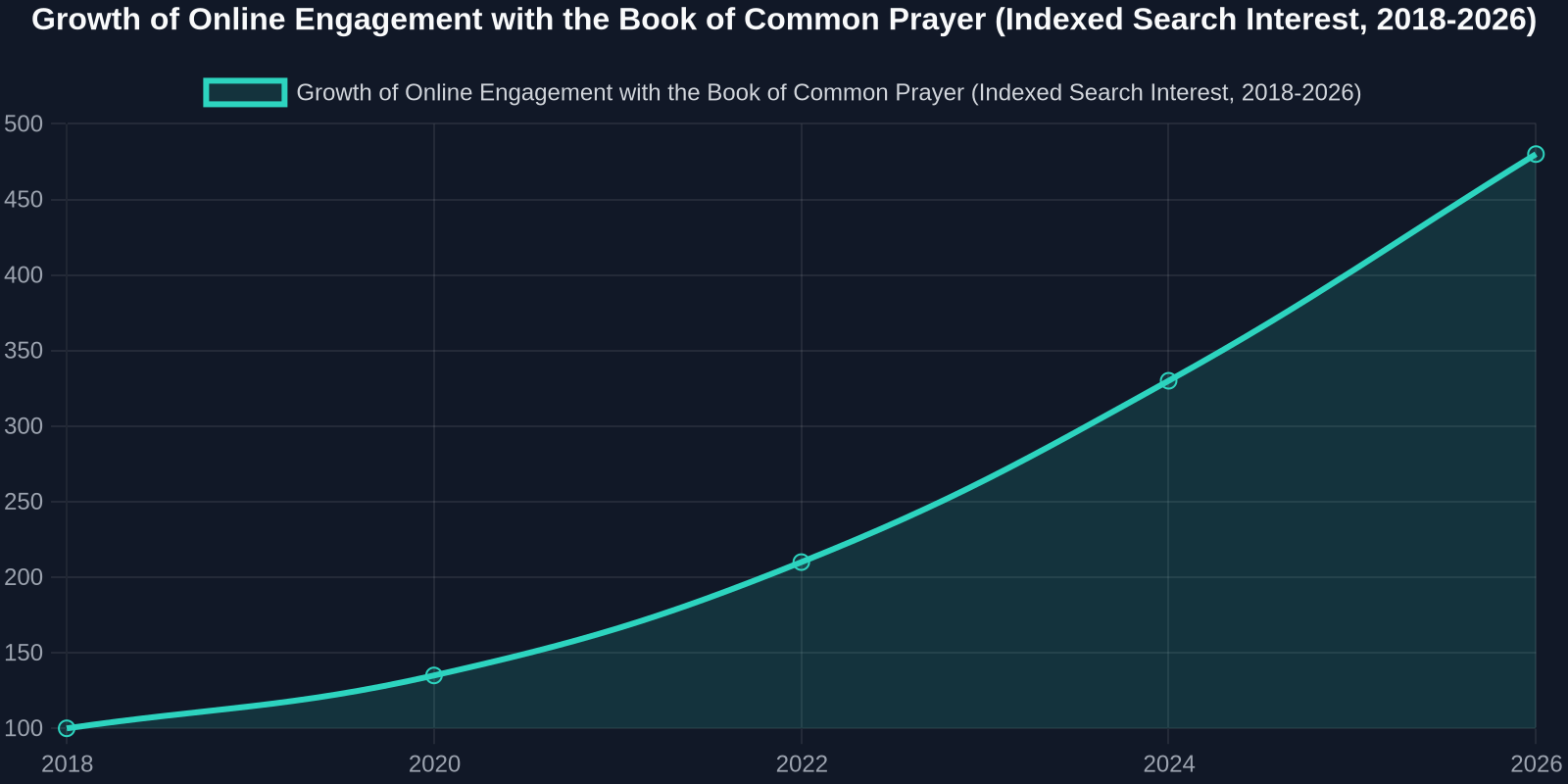
This confluence of events, a growing evangelical interest in liturgy and a historic anniversary of orthodox Christian confession, suggests the Spirit may be orchestrating a gentle, powerful renewal. The search for rootedness is a search for truth that is not a passing fad. As one analysis noted, a general literacy crisis has meant that Christians struggle with deep engagement with texts. The prayer book, by its very format, is a counter-formation, a resistance to the quick scroll. It trains the cognitive patience to listen, to repeat, to remember, and to believe.
Practical First Steps for the Curious Soul
If the idea of a structured, historic prayer life appeals to you, the path forward is not to discard your own tradition but to enrich it. The key is to start small, and start with grace. You are not joining a monastery. You are simply adding a tool to your devotional toolkit. The form of daily prayer that involves choral music, psalms, canticles, anthems, Scripture, and prayers is the full course. A beginner does well simply to taste the first morsel.
Begin with a single office. Evening Prayer, with its prayerful review of the day and its quiet hum of “preserve us, O Lord, while waking,” can be a gentle on-ramp. Don’t try to “do it right” immediately. Use a digital app or a slim booklet. Read the Psalms slowly, not for information but for formation. Let the general confession be a true moment of self-examination. A simple habit like using a daily KJV verse from an app like Vesper can prime your heart for this rhythm, placing a piece of Scripture on your Lock Screen as the first gentle step toward a more structured engagement with God’s Word.
Rooted for the Long Haul
In a world that rewards novelty, the church has a treasure chest of spiritual disciplines that are evergreen. The evangelical rediscovery of the Book of Common Prayer testifies to a simple truth: what is ancient can also be living. The very act of praying words that have survived plagues, reformation, war, and cultural revolution imparts a quiet peace. My small troubles are placed in a much larger story. My morning offering of praise joins a heavenly chorus that has been singing since Pentecost.
“It is a good thing to give thanks unto the LORD, and to sing praises unto thy name, O most High: To shew forth thy lovingkindness in the morning, and thy faithfulness every night.”, Psalm 92:1-2, KJV
The ultimate end of all liturgy is love. We are not reading a cycle of prayers to feel pious or to master a tradition. We are training our hearts to love the Lord our God with all our mind and all our soul, and to love our neighbor as ourselves. The fixed prayers for “all conditions of men,” the prayers for the sick, the prayers for those in peril, these expand our often-shriveled capacity for intercession. They remind us that we belong to one another, a body whose Head is Christ. This, finally, is why the Book of Common Prayer is having its moment. It carries us, day by day and year by year, out of our small selves and into the wide, merciful heart of God.