YouVersion's AI Leap: What Claude Means for Your Daily Devotional Rhythm
Published on November 17, 2026 · 14 min read

There’s a quiet moment many of us know well. The alarm sounds, a hand reaches for the phone, and before the fog of sleep even clears, the screen illuminates with a verse chosen just for today. For millions, this isn't a habit tied to a leather-bound book and a highlighter; it’s a digital tap on a glowing rectangle. The YouVersion Bible App has, arguably, become the hymnal of the modern age, a shared, invisible architecture of daily devotion. Recently, the architects of that digital sanctuary, led by founder Bobby Gruenewald, announced a new layer to its foundation: the integration of artificial intelligence, specifically Anthropic’s Claude alongside OpenAI’s ChatGPT.
It’s easy to react to a headline like “AI in my Bible App” with a visceral flinch. We live in a time where technology often promises connection and delivers noise. For the believer trying to nurture a quiet, grounded faith, the intrusion of an algorithm into sacred space can feel like a step too far. But before we mute the notification, it’s worth taking a breath and asking a deeper question: when does a tool become a distraction, and when can it gently clear a path toward stillness? The answer, as with most things in the life of faith, lies not in the tool itself, but in the quiet intention of the heart using it.
The sheer scale of this development is striking. YouVersion isn't a niche app for a tech-savvy few; it is a central hub for a massive, global community of believers. When a platform of this magnitude introduces a technology as transformative as AI, it isn’t just a feature update. It’s a bellwether for how an entire generation might learn to interact with Scripture. Bobby Gruenewald, reflecting on the integration, has not presented it as a sentient pastor in your pocket, but as a new kind of guide rail, a research assistant for the soul. The vision articulated is for an AI that can help users trace a theme across all sixty-six books, understand the complex cultural context of a passage in ancient Ephesus, or find a Psalm that mirrors an unspoken emotional turmoil a user might not know how to search for.
The Heart Behind the Algorithm: Bobby Gruenewald's Vision for Faithful Tech
To understand the “why” behind the code, we must look at the motivations of its shepherds. Gruenewald has consistently spoken about the church's calling to be a missionary to the digital frontier, not a refugee camp retreating from it. For him, the integration of AI models like Claude and ChatGPT is a logical step in a mission that began with making the Bible accessible on a Palm Pilot. The goal has never been to replace embodied church community or the quiet whisper of the Holy Spirit, but to remove the friction between a seeker’s question and the wisdom of the text.
There’s a profound tension here, and Gruenewald’s team seems to be navigating it deliberately. A generic AI, asked about forgiveness, might scrape the internet and give you a blend of pop psychology, a quote from a philosopher, and a self-help bullet point. A constrained, theologically-aware model, however, can be directed not to invent new truth, but to index the vast library of existing Christian thought and present it in a conversational way. It’s the difference between a search engine that returns 10 million links on “anxiety” and a wise friend who says, “Let’s look at what the Bible actually says about fear, and maybe read what Charles Spurgeon once wrote about casting your cares on Him.”
From Concordance to Conversation: How AI Changes Scripture Search
To appreciate the shift, we have to remember the tools of the past. The mature saints in many of our lives knew the dusty scent of a Strong's Concordance, a massive volume where one could look up an English word and trace it back to its original Hebrew or Greek root. This process was slow, deliberate, and deeply rewarding. It forced a pause. The digital age compressed that pause. A keyword search in a Bible app brings results in milliseconds. We gained speed, but we lost the slow simmer of word study.

AI offers a middle way, not a return to the slow manual labor of the concordance, but the re-introduction of depth through dialogue. Imagine sitting with the Beatitudes. “Blessed are the meek,” you read. You know the word “meek” feels weak in modern ears. A simplistic digital search might just show you other verses with the word “meek.” But an AI-powered assistant, trained to provide theological context, can explain that the Greek word “praus” was often used to describe a wild stallion that had been trained to respond to the reins. It’s not weakness; it’s power under discipline. It can then link you to saints like Thomas à Kempis or Dietrich Bonhoeffer, who wrote profoundly on this topic.
This is crucial. Many of us don't come to the text in a sterile academic vacuum. We come to it bleeding, worrying, or celebrating. We come to it from a hospital waiting room or after an argument with a spouse. The promise of this AI is not that it replaces the pastor, but that it can act as a triage nurse in a spiritual emergency, immediately connecting a raw human emotion to the corresponding balm of Gilead found in the King James text. For a new believer who doesn't know where to turn when reading the Bible feels overwhelming, a gentle, guided conversation could be the bridge that keeps them from silently slipping away in confusion.
The Quiet Risk in the Digital Cathedral
Yet, every gift brought into the sanctuary must be examined. A hammer can build a house or smash a window. The same AI that can unpack the Greek perfect tense can also subtly condition us to bypass the difficult, jarring parts of Scripture. The Bible is not a self-help manual where every page soothes. It contains Ecclesiastes' existential despair, Job’s raw accusations against God, and the terrifying silence of Holy Saturday. A user-facing AI, optimized for helpfulness and user retention, faces the temptation to smooth out the rough edges of the text to make it more immediately “applicable.”
We must also consider the simple discipline of memory. When all wisdom is available instantly via a chat window, the collective memory muscle of the church can atrophy. Deuteronomy speaks of hiding the Word in our hearts. A prompt is not a memory. A summarized answer is not an internalized promise. In the KJV, the Psalmist does not say, “I have Googled thy word that I might not sin against thee.” The verb is physical, emotional, and internal, a treasuring. The test for AI in our devotional lives will be whether it serves as a catalyst for memorization or a replacement for it.
“Thy word is a lamp unto my feet, and a light unto my path.”, Psalm 119:105 (KJV)
Mapping a New Daily Rhythm: AI as a Morning Guide
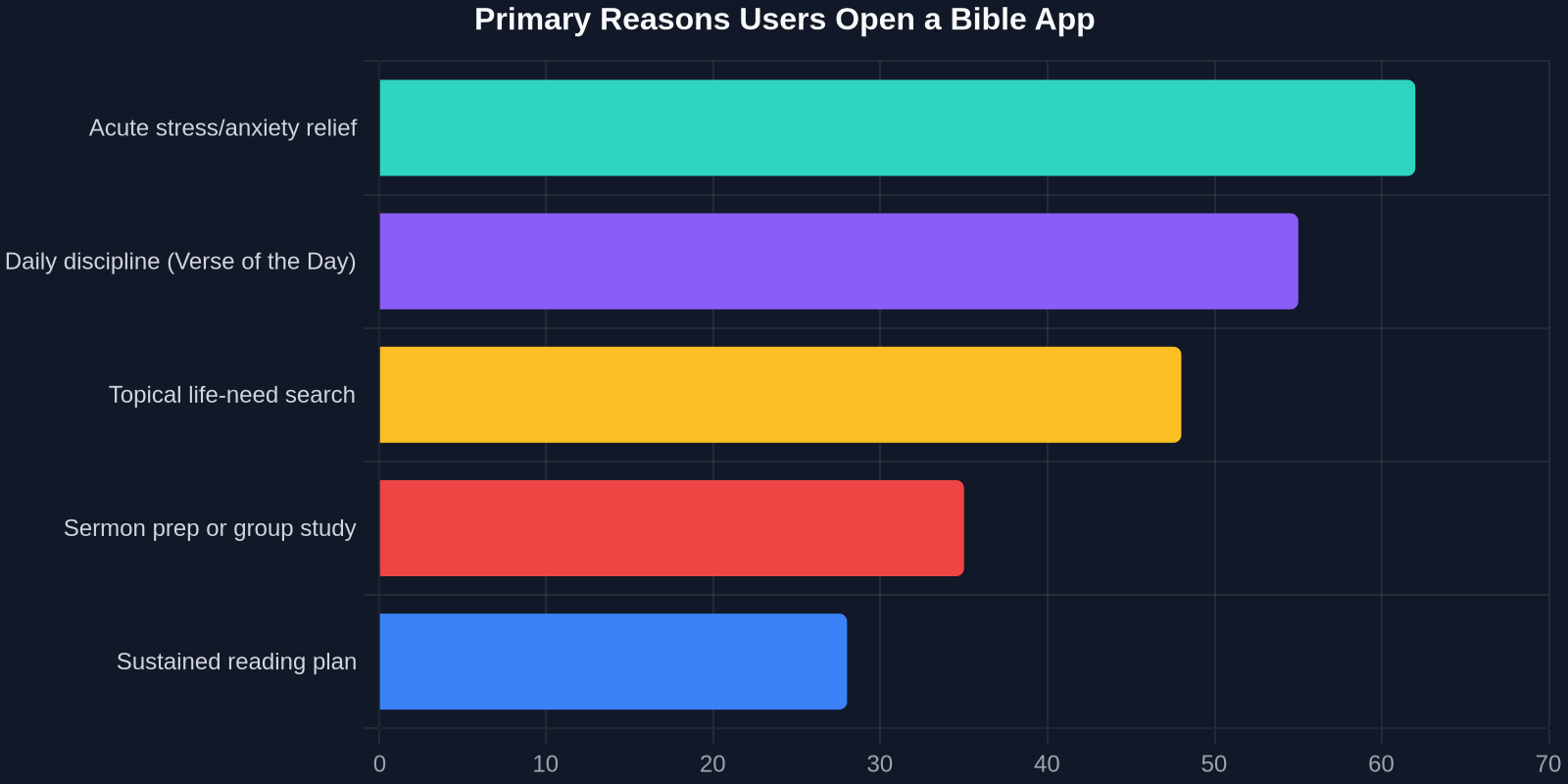
Let’s step back from the corporate strategy and into a quiet living room at 6:30 AM. How does this actually change a Tuesday? For the everyday Christian, the working parent, the frazzled student, the tired caregiver, a devotional life is fragile. It’s the first thing sacrificed on the altar of a busy morning. The beauty of YouVersion’s move is that it meets a need that is achingly practical before it is intellectual. We don't need more information; we need a gatekeeper against the anxiety that floods our minds the second we unlock our phones.

Currently, a morning rhythm often looks chaotic: open phone, see a stressful work email, scan alarming headlines, check a bank balance, feel a spike of cortisol, and then, hopefully, open a Bible app for a verse. By then, the mind is already a whirlwind. The integration of AI, if designed well, offers an intervention. Instead of a passive notification, the app could become aware of the user’s pattern of morning anxiety. A subtle prompt might not be a generic verse, but a conversational nudge: “You’ve been reading about worry this week. Jesus spoke about the sparrows. Would you like a moment to just listen to Matthew 6?”
| Habit | The Old Digital Flow | The AI-Assisted Flow |
|---|---|---|
| First App Opened | Email / Social Media | Bible App with contextual prompt |
| Emotional State | Reactive, scattered | Curated, calm invitation |
| Engagement with Text | Passive reading of a verse | Guided meditation linking text to life |
| Follow-up | Close app, resume day | Saves a reflection, prompted for evening review |
The Unchanging Voice in a Changing Medium
It’s profoundly beautiful and perhaps divinely ironic that this high-tech frontier is being navigated by an organization whose core product is a library of ancient, unchanging texts. The KJV, with its majestic “thees” and “thous,” seems to belong to a world of candlelight and parchment, not servers and algorithms. Yet, the Word has always been translated into the language of the people. The move from a scroll to a codex was a technological revolution. The printing press put the Bible in the hands of the commoner. Radio carried sermons across oceans. The internet made the text instantly searchable. AI is merely the next medium, and the lamp of Psalm 119 is needed here too.
The sheer volume of these daily touchpoints underscores a responsibility. When a platform influences the spiritual formation of billions of moments, the algorithm must be a servant, not a master. Gruenewald’s team is fervently aware that they are not just building software; they are landscaping the digital topography of prayer. This is why the choice of partners like Anthropic, a company explicitly focused on safety and constitutional AI, is so telling. The goal is to build fences around the canyon, to steer the conversation back to historical orthodoxy when a user’s midnight questions drift toward self-destruction or heresy.
Community Without Bodies: Finding the Local in the Global
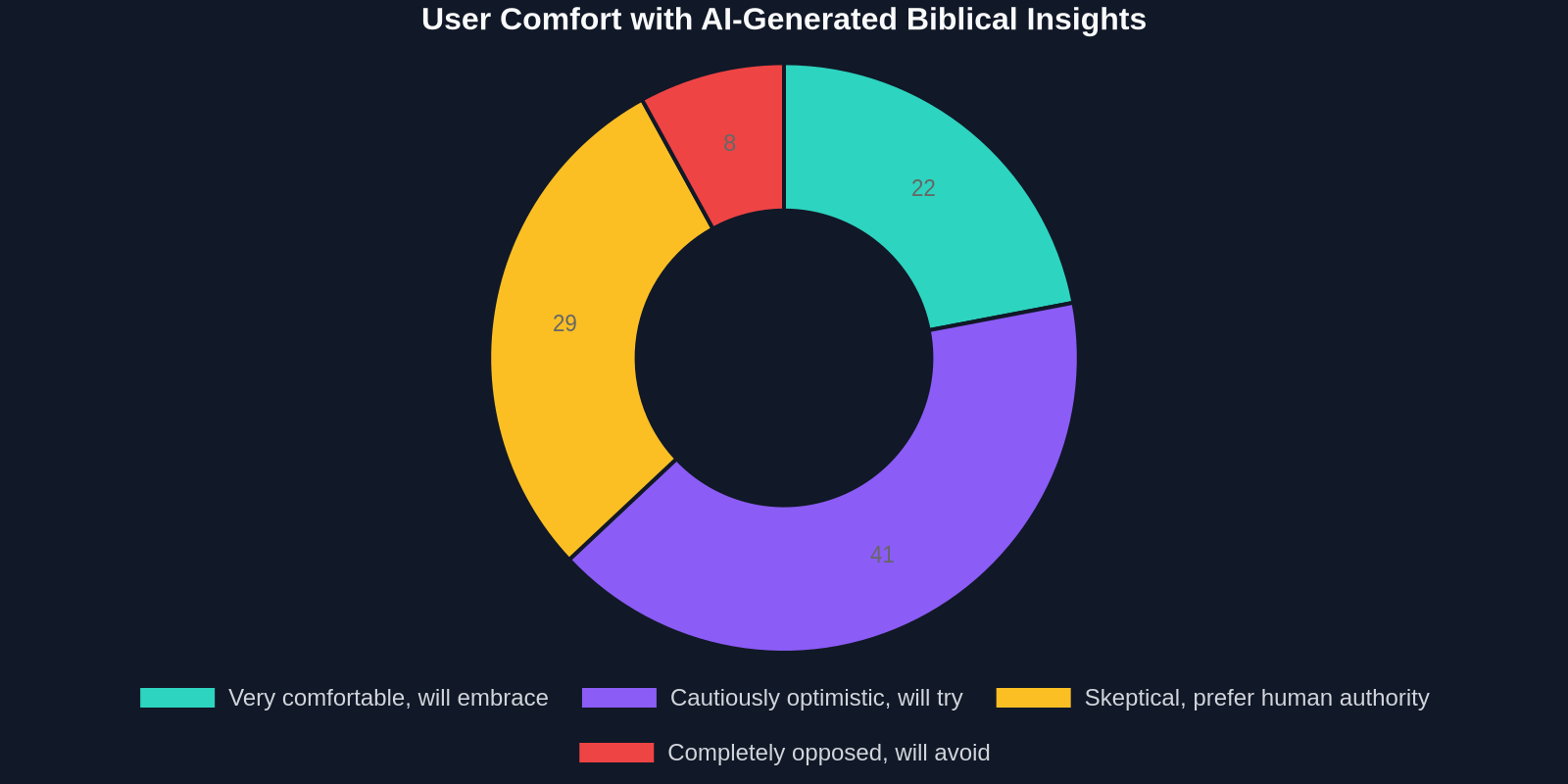
One of the subtle critiques of digital faith is that it can become a private, isolated affair between a user and a screen. A user could have an entire emotional conversation with an AI about a passage, feeling enlightened, without ever entering the messy, carpet-stained fellowship hall of a real church. How does AI enhance community without replacing it? The answer from YouVersion’s roadmap seems to be connection. The vision isn’t for the AI to say, “I understand you.” The vision is for the AI to say, “Your church is studying this book right now. Here’s the link to the Wednesday night sign-up.” Or, “Three friends in your prayer group are also reading about patience. Here’s what they highlighted.”

This turns the AI from a solitary guru into a networker for the Body. It becomes a hyper-efficient usher, directing you not to a digital room indefinitely, but back to the physical pew. For the local pastor, this tool becomes an ally. A congregant who has been wrestling with a specific theological doubt all week, a doubt flagged only in their private devotional notes, can be encouraged by the AI not to trust the machine’s answer, but to bring that very question to the office hours of their own shepherd. The technology, at its best, doesn't answer the cry of the heart; it amplifies it until a local, human response is necessary.
Practical Wisdom for the Seeker: Using AI Without Losing Yourself
So, how should we, the walking, breathing, often-exhausted flock, actually approach this? The call is not to techno-paranoia nor to naive embrace. It is to the patient wisdom of 1 Thessalonians 5:21: “Prove all things; hold fast that which is good.” We need to build a frame around this new tool. If you are trying to start your morning with God instead of your phone, here is a practical, gentle rubric for keeping Christ first, even when using an AI-powered app.
First, pray before you prompt. It sounds almost too simple, but it is the only guardrail that matters. Before typing a query about a life problem into a chat interface, pause and pray something like, “Holy Spirit, you are the true interpreter. Use this tool to still my mind, not to fill it with noise.” This small pause signals to your own nervous system that the machine is subordinate to the Spirit.
Second, use AI for context, not for authority. When the model spits out an explanation of a verse, let it be the beginning of your study, not the end. Ask it for cross-references and open your own Bible to read them. Compare its summary of a Puritan’s commentary to the actual source. The moment we trade the hard, blood-earned work of individual study for the smooth, effortless summary of a machine, we have traded gold for gold-plated plastic.
Third, welcome the friction. If the AI gives you a satisfying answer in 0.3 seconds about why a loving God allowed a tragedy, pause. Recognize that an answer that comes too quickly might be a cliché, not a comfort. Bring that quick answer to a trusted, mature human friend in your community. The proverb reminds us that in the multitude of counselors there is safety. AI, by itself, is a single counselor, vastly knowledgeable, perhaps, but without a soul. Without the check of community, we are vulnerable.
The Table of Silence: Vesper's Unchanging Invitation
In all this noise about algorithms and intelligent conversation, there remains a profound power in silence. A single, unadorned verse. No comment. No context. No chat box. Just the stark, living Word presented on a screen that demands nothing but your attention. This is the quiet liturgy of Vesper, a simple iOS widget that places one verse from the King James Version directly onto your Lock Screen and Home Screen each day. It offers no AI, no notifications, no endless scrolling, just the ancient lamp for the present step. For the reader trying to start the day with Scripture instead of anxiety, having the Word as the first visual boundary upon waking is a gentle, radical act of resistance against the addictive pull of the web.
“Be still, and know that I am God: I will be exalted among the heathen, I will be exalted in the earth.”, Psalm 46:10 (KJV)
Conclusion: A Lamp for the Digital Path
The integration of AI into the Bible-platform landscape is not a fleeting trend; it is a permanent shift in the topography of faith. Claude, ChatGPT, and the models that come after them will reshape how a generation asks spiritual questions. The danger is not in the asking; the danger is mistaking the wide, easy path of instant answers for the narrow, winding road of living, embodied faith. Bobby Gruenewald and the YouVersion team are attempting a difficult, holy gambit: to make a mirror that reflects the unchanging light without trying to become the light itself.
For the everyday Christian with a full schedule, the best of this technology offers a lifeline. It can pull you out of the newsfeed and into the Psalms with a single, intelligent nudge. It can untangle a confusing passage before the coffee is done brewing. But its power ends where the Holy Spirit’s work continues. It cannot convict. It cannot comfort in the lonely watches of the night. It cannot love.
As you step into tomorrow morning, whether your hand reaches for a phone running YouVersion’s newest AI or a screen quietly displaying a simple KJV verse from Vesper, remember the goal isn’t information mastery. The goal is presence. It is to be still. To know. And to carry that knowing, however faintly, into the noise of the day.
The Lord is my shepherd; I shall not want. He maketh me to lie down in green pastures: he leadeth me beside the still waters. He restoreth my soul. (Psalm 23:1-3, KJV).
No AI can lead you there. It can only, perhaps, clear a little of the noise so you can hear the Shepherd’s voice yourself.